
How Much Is the Product Development Cost for a Hardware Product? (Full Breakdown)

Developing a hardware product is rarely a fixed-cost process. Unlike software, where development can scale with code, hardware costs are influenced by design complexity, prototyping iterations, materials, compliance requirements, and manufacturing scale.
In most cases, hardware product development costs range from:
$15,000 – $50,000 for simple consumer devices (basic mechanical or low-electronics products)
$50,000 – $250,000 for mid-complexity products (IoT devices, smart hardware, integrated electronics)
$250,000 – $2M+ for complex, regulated, or mass-market hardware systems
These numbers vary significantly depending on product engineering and prototype development decisions made early in the process.
What Impacts Development Costs?
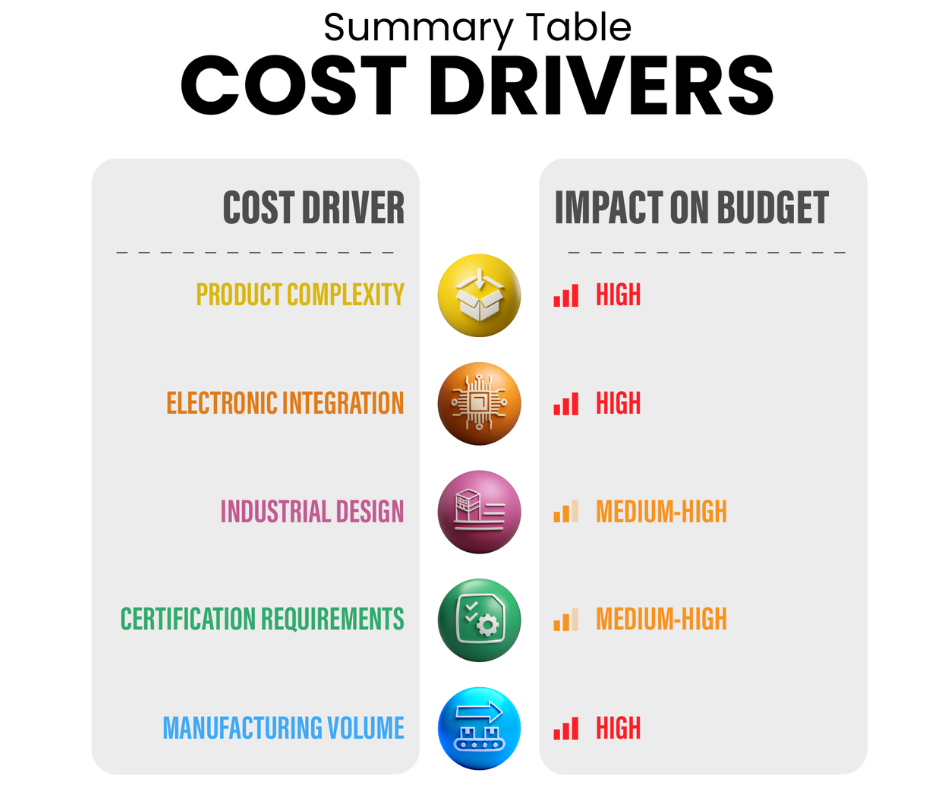
Hardware development costs are shaped by a combination of technical and business factors.
Key cost drivers:
Product complexity
Mechanical-only products are cheaper
Embedded systems and IoT products significantly increase engineering costs
Electronics & firmware
PCB design, sensors, connectivity modules, and electronics & firmware development add recurring engineering cycles
Industrial design requirements
Custom enclosures, ergonomic design, and premium materials increase both design and tooling costs
Regulatory certification
FCC, CE, UL, or industry-specific certifications can add $5,000–$50,000+
Production volume
Low-volume prototypes are expensive per unit
Mass production reduces unit cost but increases upfront tooling investment
Who These Cost Ranges Apply To
To make budgeting more practical, hardware development costs typically fall into three buyer profiles:
Startup MVP (Proof of Concept Stage)
Typical budget: $15,000 – $80,000
Focus: validating the idea quickly with minimal features
Common examples: early-stage IoT device development, simple consumer hardware prototypes
Key priority: speed over scalability
Growth-Stage Product (Pre-Production / Funding Stage)
Typical budget: $80,000 – $300,000
Focus: engineering refinement, reliability, and early manufacturing planning
Common examples: connected devices, wearable tech, smart hardware systems
Key priority: balancing cost and manufacturability
Scalable / Industrial Product (Mass Production Ready)
Typical budget: $300,000 – $2M+
Focus: certification, tooling, and production scalability
Common examples: medical devices, industrial equipment, large-scale IoT systems
Key priority: compliance and long-term production efficiency
These ranges are not just cost brackets; they reflect different engineering and business maturity levels.
Cost Breakdown by Stage
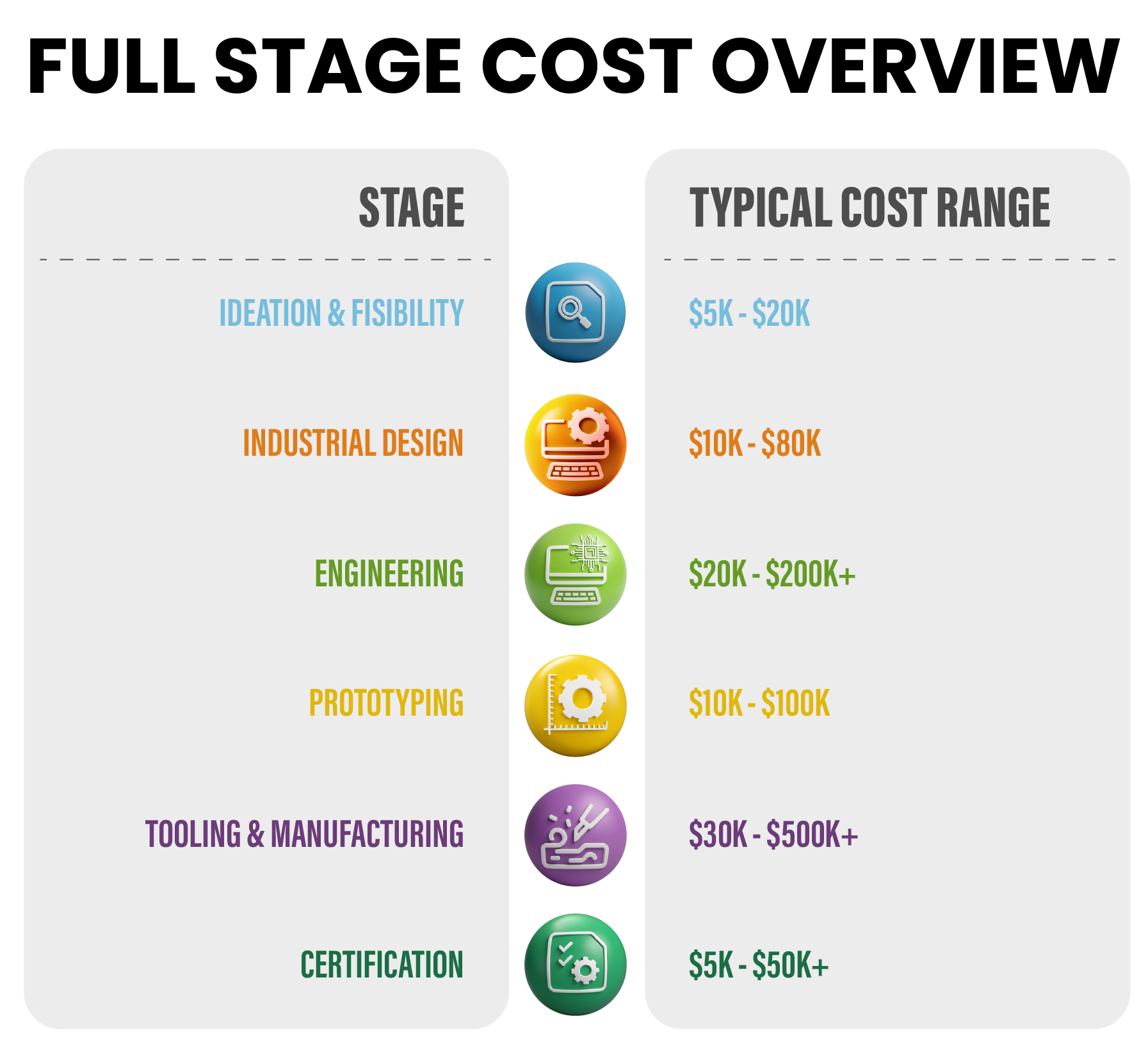
Hardware development follows a structured life cycle. Each stage contributes differently to the total budget.
1. Ideation & Feasibility
Ideation & Feasibility estimated cost: $5,000 – $20,000
Market research and validation
Technical feasibility studies
Early concept sketches
Cost risk is low, but poor validation leads to expensive redesigns later.
2. Industrial Design
Industrial Design estimated cost: $10,000 – $80,000; this phase includes:
Ergonomics and user experience
Material selection
Premium aesthetics or compact designs significantly increase cost.
3. Hardware & Software Engineering
Hardware & Software Engineering estimated cost: $20,000 – $200,000+
Circuit design (PCB)
Embedded firmware
System architecture
This is often the largest cost center in hardware development.
4. Prototyping & Iteration
Prototyping & Iteration estimated cost: $10,000 – $100,000
Rapid prototyping through mechanical engineering (3D printing, CNC)
Multiple design iterations
Functional testing
Expect multiple revisions before finalizing the design
5. Tooling & Manufacturing Setup
Tooling & Manufacturing Setup estimated cost: $30,000 – $500,000+
Injection molds
Production tooling
Factory setup and calibration
High upfront cost, but essential for scalable production.
6. Testing & Certification
Testing & Certification estimated cost: $5,000 – $50,000+
Safety compliance
Regulatory testing (FCC, CE, RoHS)
Reliability testing
Required before entering most commercial markets.
To understand how these costs fit into the full lifecycle, see our detailed guide on the Product Development Process
Hidden Costs in Hardware Development
Many hardware projects exceed budgets due to overlooked expenses.
Common hidden costs:
Design revisions after failed prototypes
Supply chain delays and component shortages
Minimum Order Quantities (MOQs)
Packaging and branding development
Logistics and warehousing setup
Unexpected certification re-testing
A common industry rule: add a 20–40% contingency buffer to your budget.
Cost Reduction Strategies
Reducing hardware development costs requires strategic engineering decisions, not shortcuts.
Proven cost-saving methods:
1. Design for Manufacturability (DFM)
Simplifies design for easier and cheaper production.
2. Early-stage prototyping
Catches design flaws before expensive tooling begins.
3. Modular architecture
Allows reuse of components across product versions.
4. Standardized components
Reduces sourcing and manufacturing complexity.
5. Early supplier involvement
Helps optimize design based on real manufacturing constraints.
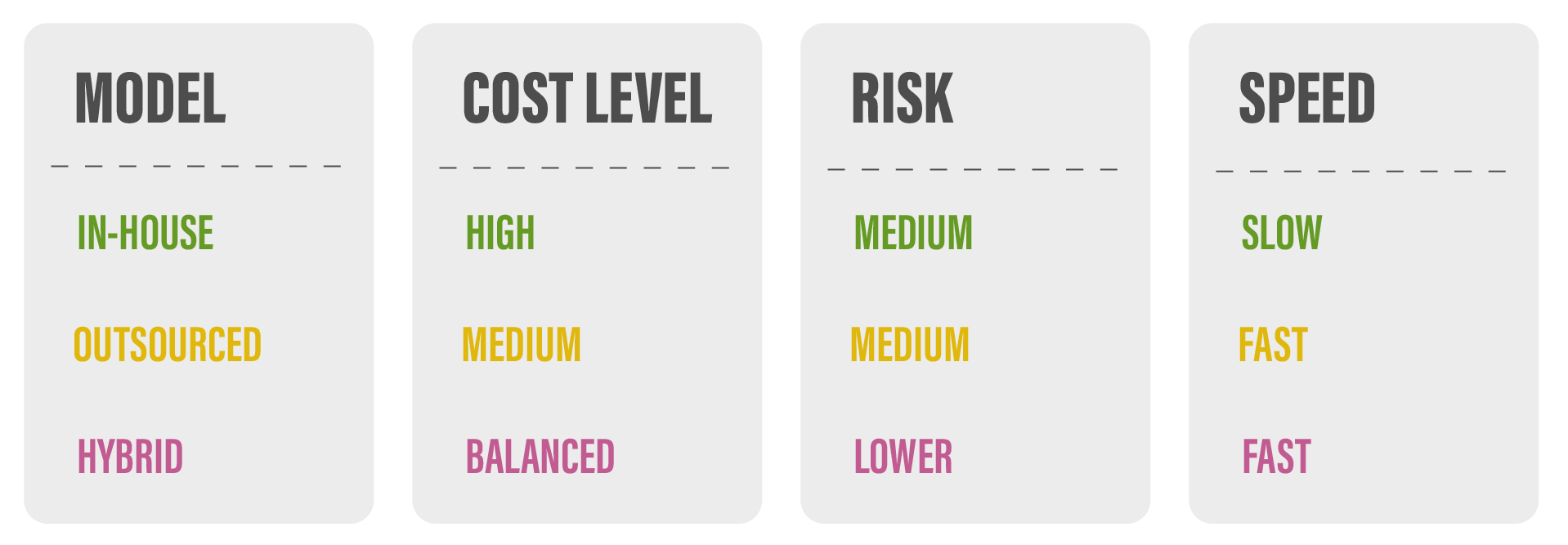
Outsourcing vs In-House Development
Choosing between outsourcing and in-house development has a major impact on cost and speed.
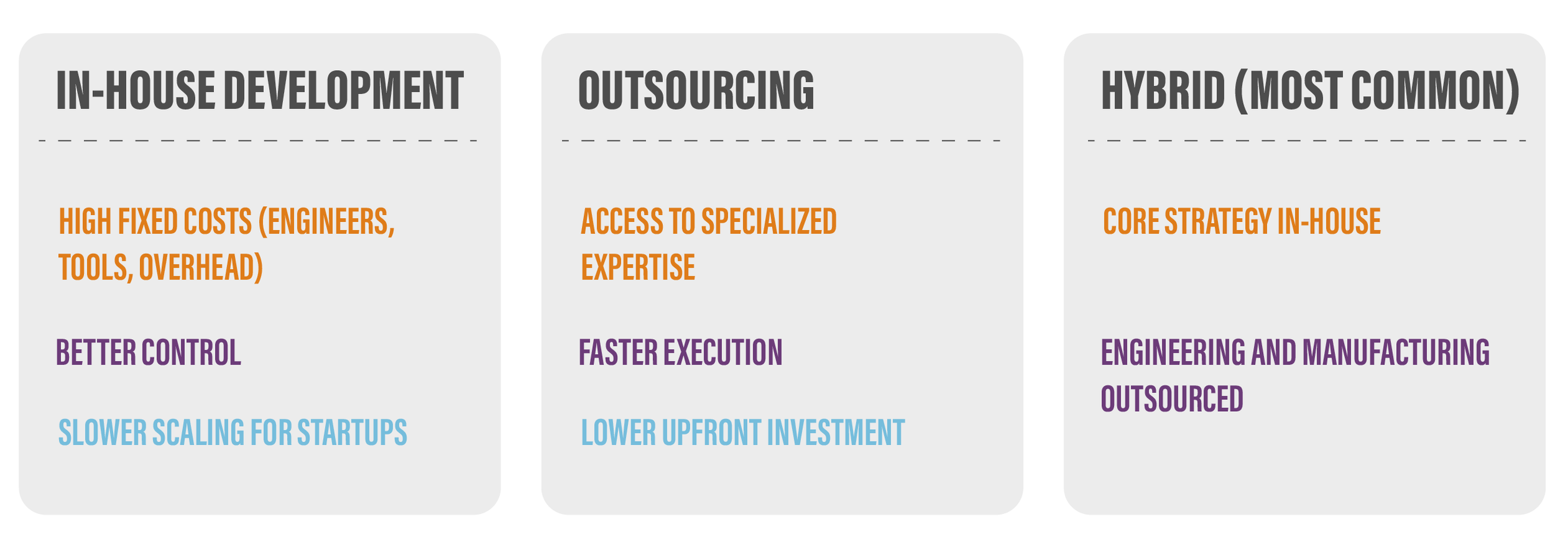
Cost Comparison:
Why Experts Save Money
Experienced hardware development teams reduce total project cost by preventing expensive mistakes early.
Key advantages:
Fewer prototype iterations
Faster time-to-market
Better supplier negotiation
Optimized material and component selection
Reduced redesign risk
In hardware, expertise reduces lifecycle cost, not just upfront cost.
When to Involve a Hardware Development Partner
Many cost overruns in hardware projects happen early, before engineering even begins.
Involving experienced hardware development teams early in the process can help:
Validate feasibility before committing to tooling
Reduce redesign cycles during prototyping
Align product design with manufacturing constraints
Avoid expensive compliance mistakes later in development
For most founders and product teams, the lowest-cost decision is not building everything in-house, but making the right engineering decisions early.
Frequently Asked Questions
How much does it cost to develop a hardware prototype?
Most hardware prototypes cost between $10,000 and $100,000, depending on complexity and iteration cycles.
Why is hardware development expensive?
Because it involves physical materials, engineering iterations, tooling, and compliance testing, each requiring real-world resources.
What is the cheapest way to build a hardware product?
Start with off-the-shelf components, minimal features, and rapid prototyping before investing in tooling.
How long does hardware development take?
Typically, 6 to 24 months, depending on complexity and certification requirements.
What is the highest cost in hardware development?
Engineering (especially electronics/firmware) and manufacturing tooling are usually the largest cost drivers.
Planning a Hardware Product?
If you're currently estimating the cost of a hardware product, the most expensive risks usually come from early-stage assumptions, not manufacturing itself.
A structured product development approach helps identify:
realistic production costs
engineering complexity early
potential design risks before prototyping
If you'd like to avoid costly redesigns later in the process, reviewing your concept with an experienced product development team can significantly improve budget accuracy and reduce development risk.