
Hibu: Personal Connected Panic Button For Seniors
Independence and Safety Through Thoughtful Wearable Design
Expertise
Industrial Design
Electronic Design
Firmware Development
Prototyping
Certifications
Quality Control
Mass Production
Awards
A’ Design Award Silver
Client
Monitorlinq
Year
2014
In 2014, Tektos Ecosystems partnered with Monitorlinq to address a critical safety concern facing aging populations: the inability to call for help during emergencies. Every year, millions of elderly adults experience falls or medical emergencies while alone, and many are unable to reach a phone or alert someone who can help.
Traditional medical alert systems existed, but they came with significant limitations. Most required bulky base stations installed in the home, tethering users to specific locations. Many looked overtly medical, which discouraged daily wear because seniors didn't want to appear frail. And critically, most offered only a single panic button without the intelligence to differentiate between types of emergencies or detect falls automatically.
Monitorlinq envisioned something different: a wearable device that seniors would actually want to wear every day—comfortable, unobtrusive, and non-stigmatizing. It needed to work anywhere the user went, be smart enough to detect falls automatically, and be waterproof since many accidents happen in bathrooms.
Working across industrial design, electronics engineering, firmware development, and manufacturing, we created Hibu: a personal emergency response system that preserved independence while providing security, ultimately earning a Silver A' Design Award.
Project Overview
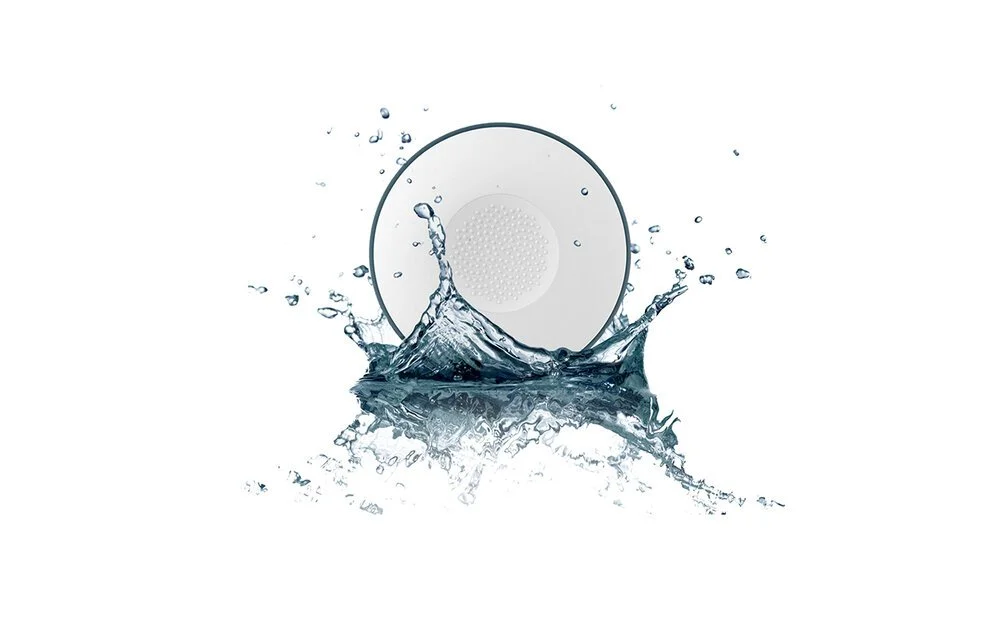
The technical requirements presented a complex puzzle. The device needed to be small and lightweight enough for all-day wear, yet robust enough to house sensors, electronics, a battery, and wireless connectivity. It had to be comfortable against skin for hours, yet waterproof to IP67 standards so users could wear it in the shower—exactly where many falls occur.
Battery life was critical. Unlike fitness trackers that users charge nightly, an emergency device needed to remain functional for extended periods. Seniors might forget to charge regularly, so we needed battery life measured in weeks or months, not days. Yet the device also needed continuous Bluetooth connectivity and motion sensing, both power-intensive functions.
The fall detection algorithm posed its own challenges—sensitive enough to catch genuine falls but robust enough to avoid false alarms from normal activities like sitting down quickly. Too many false alarms would erode trust and lead users to stop wearing the device.
We also needed a multi-level alert system. Not every emergency requires the same response. A fall might need immediate emergency services, while feeling unwell might warrant a call to family first. The device needed intelligence to communicate different urgency levels.
From a design perspective, we faced the challenge of making emergency technology feel non-medical. Many seniors resist devices that make them look or feel old. We needed something that felt more like modern wearable technology than a medical alert pendant, working for different body types and wearing preferences—as a pendant, wristband, or belt clip.
Perhaps the biggest challenge was designing for users who might have declining vision, reduced dexterity, or cognitive changes. Controls needed to be simple and intuitive even under stress. The entire user experience had to accommodate the realities of aging while respecting user dignity.
The Challenge
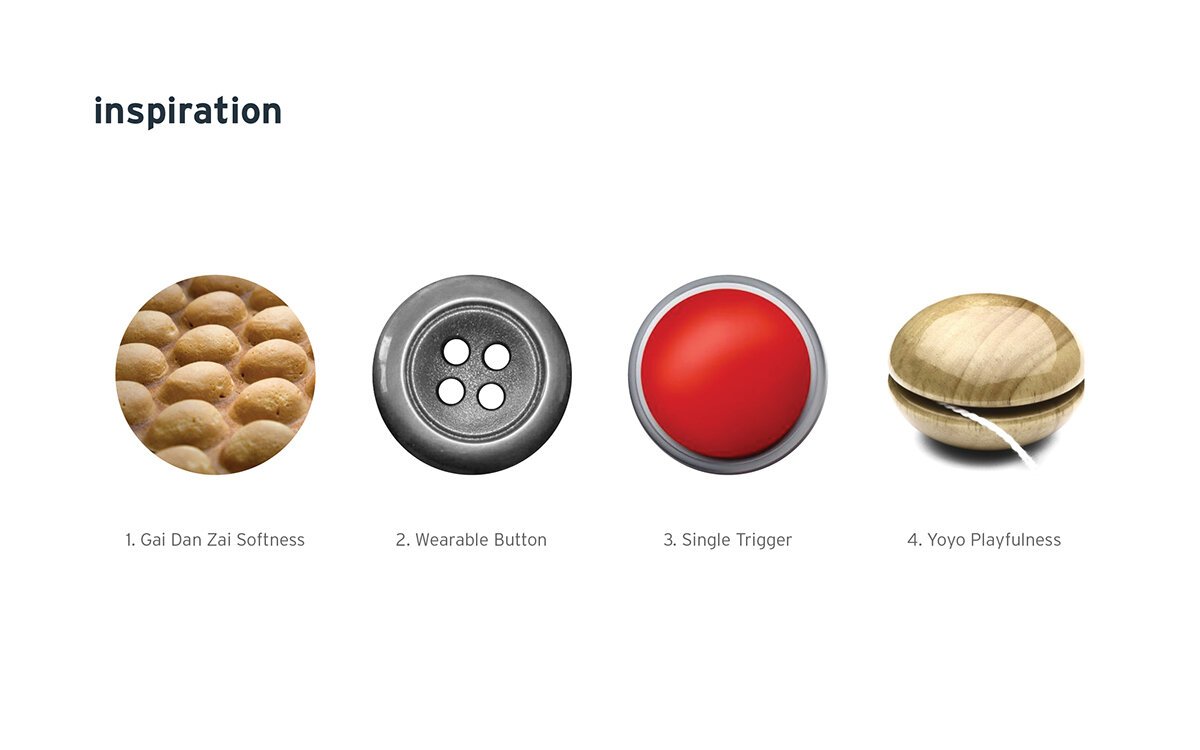

We began with extensive user research, spending time with seniors, families, and caregivers to understand daily routines, concerns, and preferences. We learned that dignity and autonomy were as important as safety—solutions that felt infantilizing were rejected even if technically superior. This shaped our design philosophy: create something users would choose to wear because it felt good.
Industrial Design: Comfort and Discretion
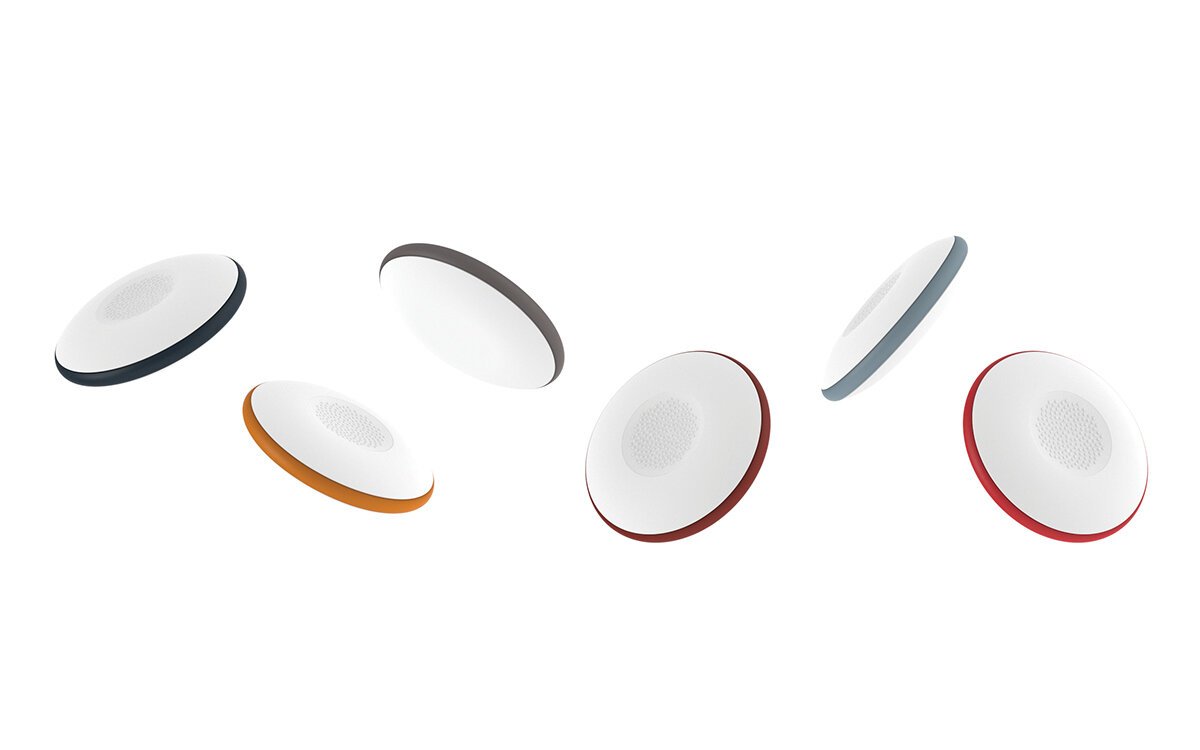
We explored dozens of form factors before settling on a soft, rounded design that could be worn multiple ways. The final form uses lightweight ABS-PC for structure and soft PU for skin-contact areas, providing durability while ensuring comfort during extended wear.
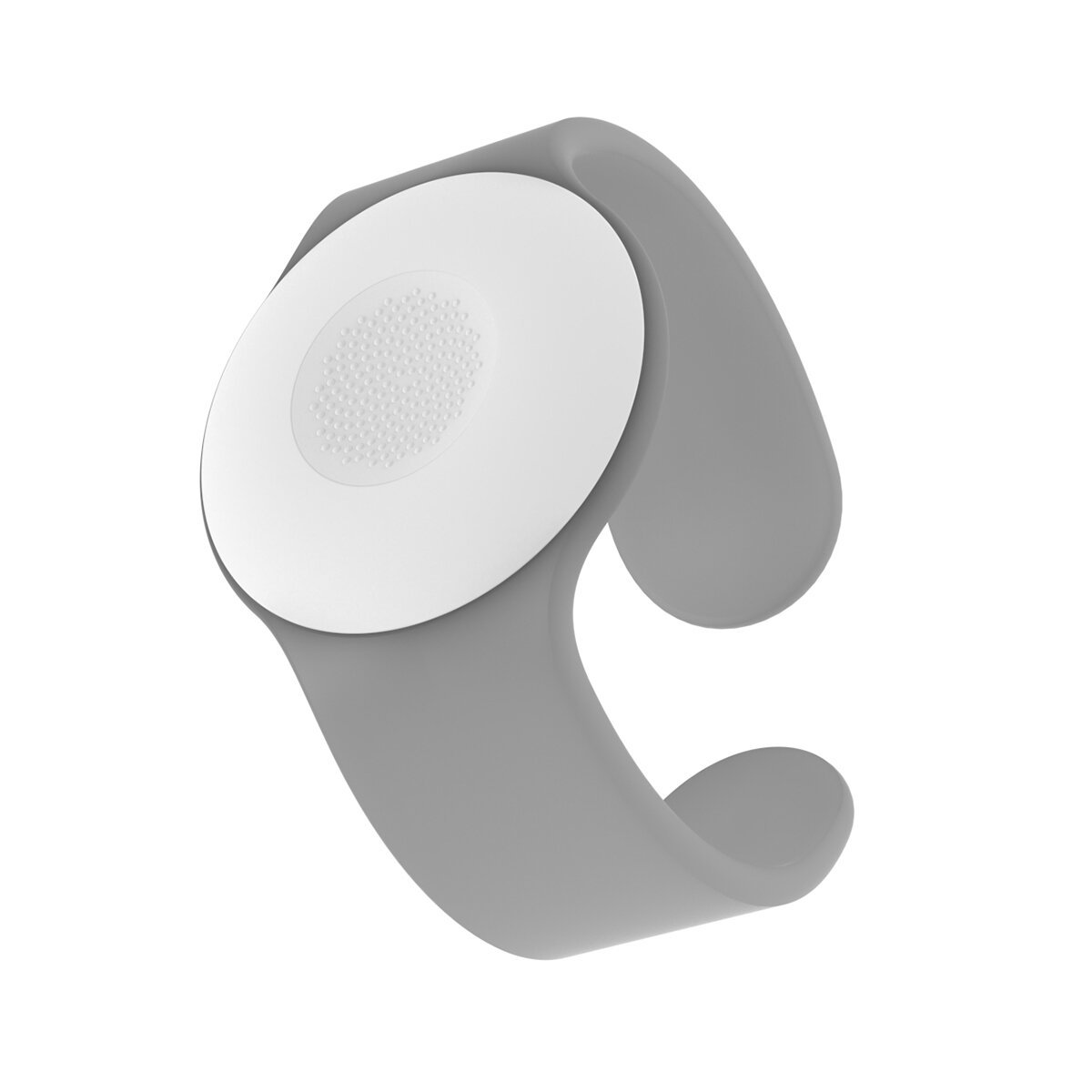
The curved, pebble-like shape fits naturally in the hand and against the body with no sharp edges. We designed a versatile attachment system allowing Hibu to be worn as a pendant, clipped to a belt, or attached to a wristband. The aesthetic deliberately avoids medical device conventions, feeling more like consumer electronics or modern jewelry.
Waterproofing and Electronics
Achieving reliable waterproofing required careful engineering at every level. All seams use ultrasonic welding or specialized gaskets maintaining integrity after repeated immersion. The button mechanism presented particular challenges—it needed to operate reliably underwater while maintaining the seal. We developed a sealed membrane button providing clear tactile feedback without creating pathways for water ingress.
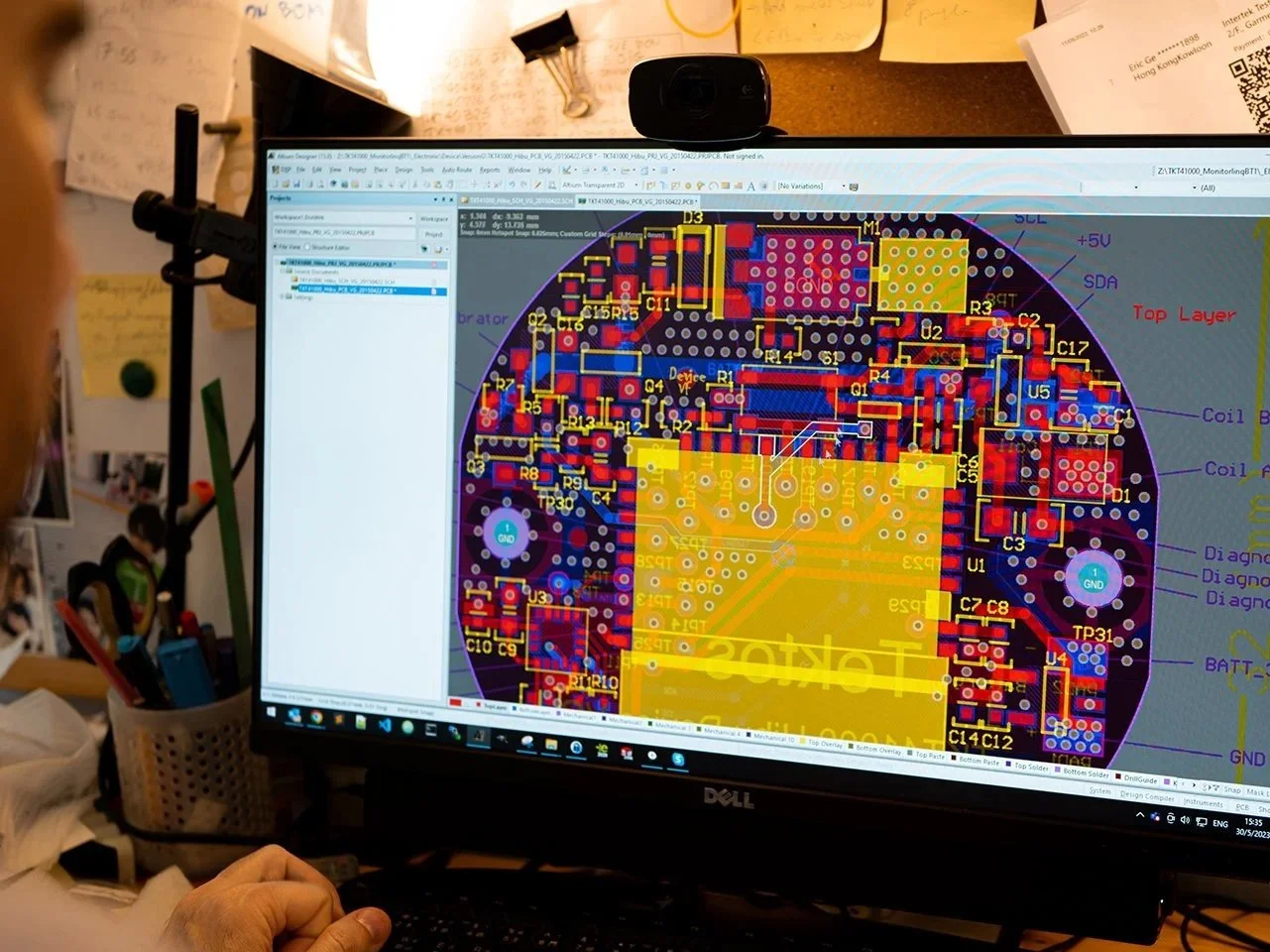
The electronics architecture centers on Bluetooth Low Energy paired with a smartphone, eliminating separate base stations and leveraging the phone's cellular connection. We selected motion sensors capable of detecting fall acceleration patterns while filtering normal movement. Power management optimized every aspect—Bluetooth uses low-energy protocols, sensors use intelligent wake modes, resulting in battery life measured in months.
Firmware: Intelligence and Reliability
We implemented a three-level alert hierarchy:
Critical Emergency: Automatically triggers when falls are detected
Urgent Alert: User-initiated for situations requiring quick help
Non-Urgent Request: For assistance that's not time-critical
The fall detection algorithm underwent extensive tuning using data from simulated falls and normal daily activities, refined with machine learning to distinguish genuine falls from false positives. Localization leverages the smartphone's GPS, providing responders with precise location.
Testing and Manufacturing
Field testing with elderly users revealed crucial insights. We learned button resistance needed precise tuning for arthritic hands. User feedback shaped refinements from tactile feel to LED indicators to vibration patterns. Transitioning to mass production required specialized assembly processes for waterproof sealing and detailed quality control protocols testing every unit before shipment.
Our Approach
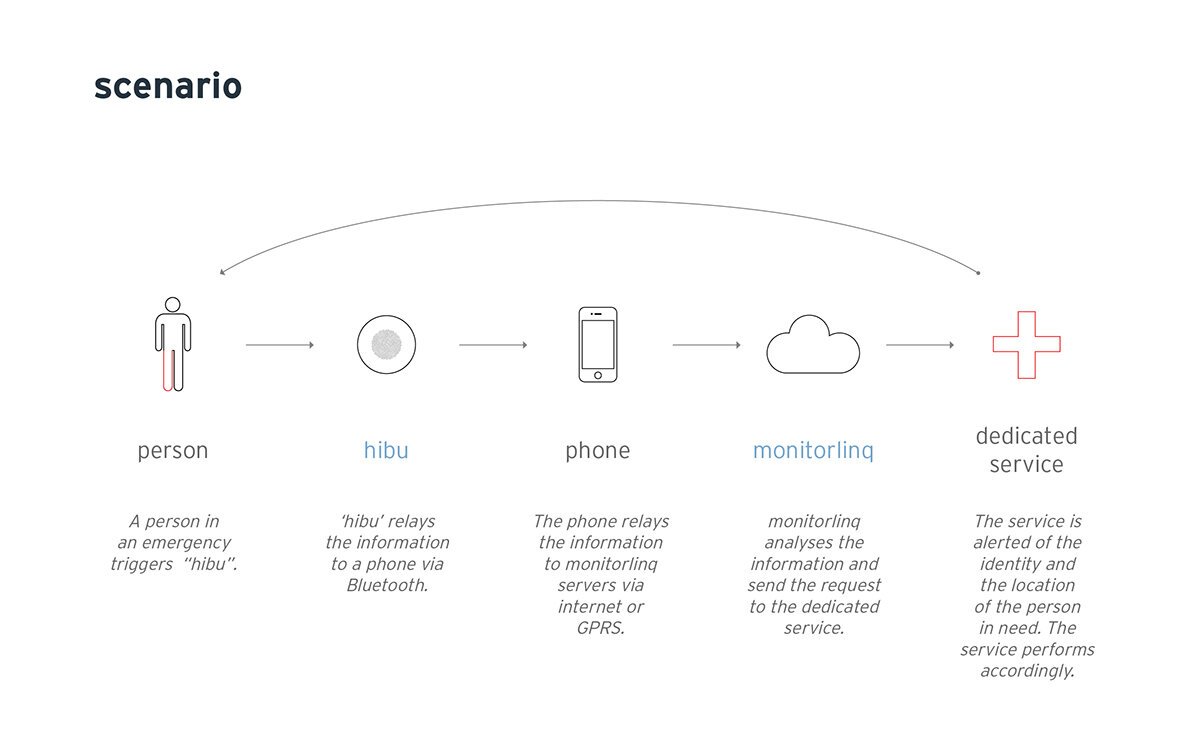
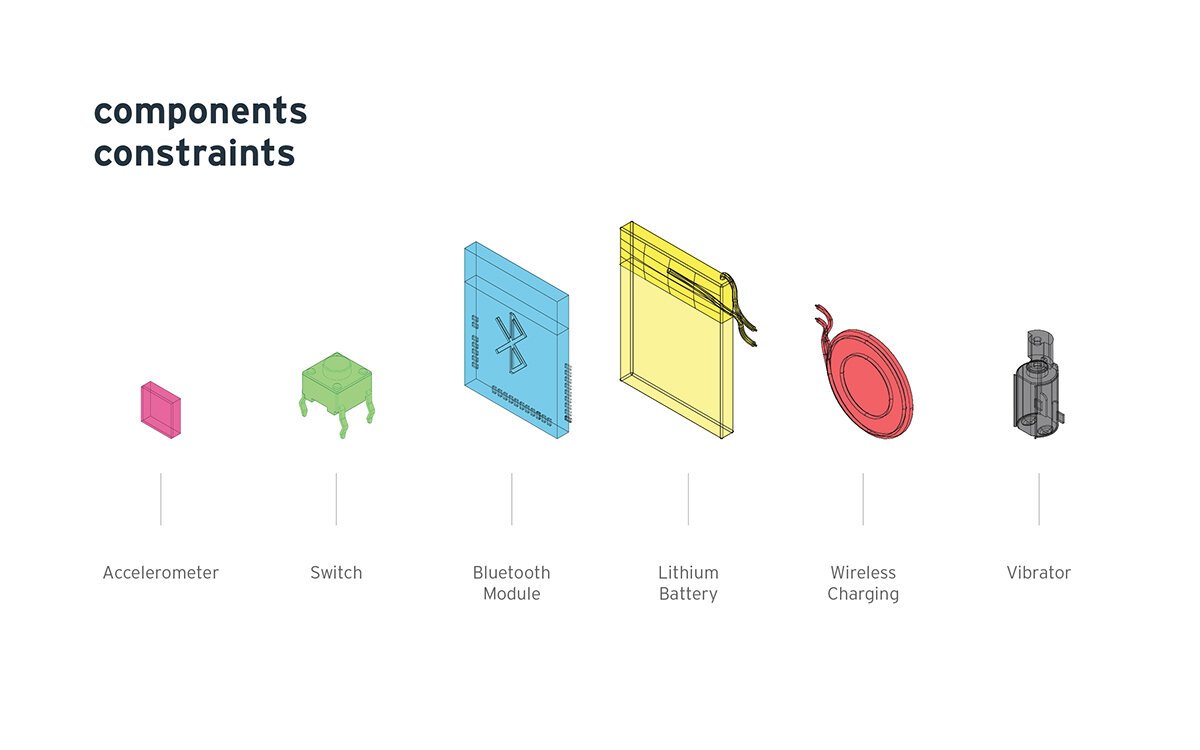
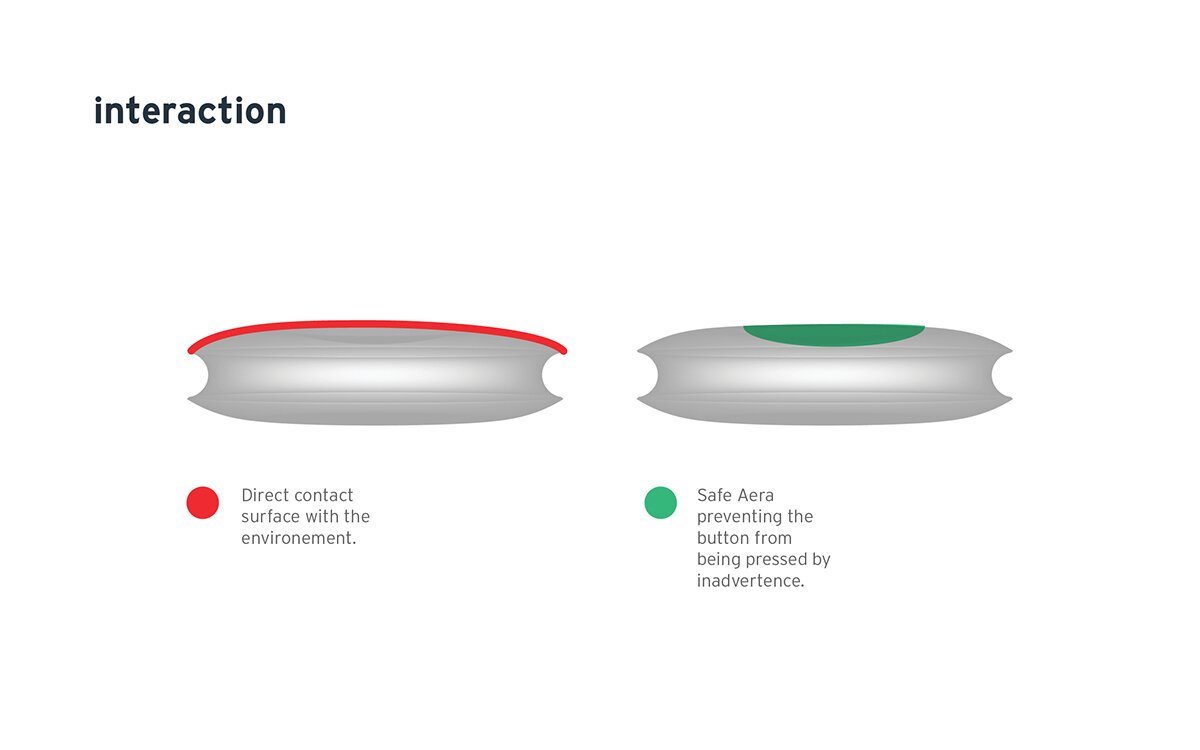
The final Hibu device embodies emergency response technology that respects user dignity while providing genuine safety. Lightweight and soft-touch, it feels more like modern wearable technology than medical equipment. The waterproof construction means continuous wear—in the shower, gardening, during daily activities.
Smart Fall Detection monitors movement patterns continuously, automatically sending alerts when falls are detected. A brief delay allows users to cancel false alarms before the full emergency protocol activates.
Manual Emergency Alerts via the prominent button work for any emergency situation. The multi-level system (single press for urgent, long press for non-urgent) provides control while keeping the interface simple.
Smartphone Integration handles communication, sending alerts via SMS, push notifications, and calls to emergency contacts. The app allows family members to configure contacts, adjust settings, check battery status, and view location history. Because it leverages the phone's cellular connection, it works anywhere—at home, traveling, or shopping.
GPS Localization through the connected phone provides responders exact location, valuable for emergencies occurring outside the home. Extended battery life reduces charging frequency with clear low-battery warnings.
The Solution
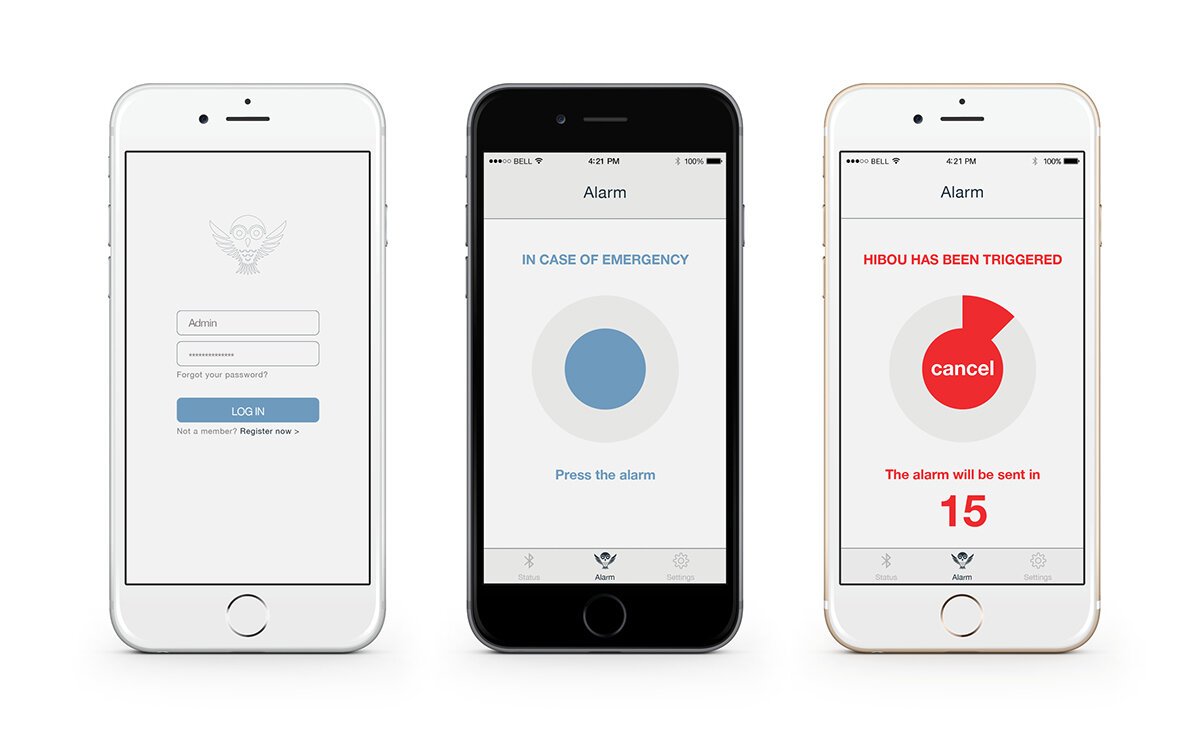
Hibu achieved its goal of being a safety device seniors actually want to wear. The comfortable, non-stigmatizing design encouraged consistent use—the critical factor determining whether emergency devices save lives. Users reported feeling more confident in their independence, knowing help was available instantly.
Family members experienced reduced anxiety with confidence that emergencies would be detected and communicated. The automatic fall detection proved particularly valuable in real-world incidents where users fell and couldn't reach the button, yet the system automatically triggered alerts bringing timely help.
The smartphone integration made the system more accessible and less expensive than traditional medical alert services. The waterproof design meant continuous protection during high-risk situations like bathing. The Silver A' Design Award validated our human-centered approach, recognizing that Hibu successfully balanced technical functionality with thoughtful design respecting user dignity.
The Result
This project deepened our understanding of designing for specific populations with particular needs. We learned that comfort in wearables directly impacts mission success—technical capability means nothing if users don't wear the device consistently. Designing for emergencies requires balancing being forgettable during normal times yet immediately accessible during crises.
False alarm management proved more critical than anticipated. Even small percentages of false positives create alert fatigue eroding trust. Working with elderly users taught us that inclusive design benefits everyone—large buttons for arthritic hands work perfectly for anyone under stress. Designing for constraints often leads to universally better products.
Family dynamics play a huge role in adoption. Adult children often research and configure devices for aging parents. Success meant satisfying both primary users (seniors) and secondary users (monitoring family members). This project reinforced that meaningful innovation often comes from reimagining existing categories rather than inventing entirely new technologies.
What We Learned
Hibu showcases Tektos Ecosystems' ability to design wearable technology balancing multiple complex requirements. This project required expertise across industrial design for wearable comfort, electronic engineering for compact power-efficient systems, firmware development for intelligent algorithms, waterproof engineering, user experience design for accessibility, and manufacturing for consistent quality at scale.
Our team created a form working ergonomically for diverse body types while achieving waterproof integrity. The electronics delivered a compact system maintaining Bluetooth connectivity, sophisticated motion sensing, and months of battery life. Firmware engineers developed algorithms that intelligently detect falls, minimize false positives, and optimize power consumption.
Throughout the project, we maintained focus on the human element—understanding that behind every specification was a real person deserving safety without sacrifice of dignity. This human-centered approach informed every technical decision and created a product users chose to wear rather than merely tolerated.
Whether you're developing wearable technology, IoT devices for vulnerable populations, smart home safety systems, or any product where user acceptance determines success, Tektos Ecosystems brings the multidisciplinary expertise and user-focused design philosophy to create solutions that genuinely serve human needs.
Our Expertise in Action
From elderly care to medical devices to consumer wearables, Tektos Ecosystems specializes in designing products where user experience and reliability are paramount. If you have an idea that could improve lives, we'd love to help bring it to reality.