
Mustard Air Sensor: Smart IoT Air Quality Monitor
Making Indoor Air Quality Visible and Actionable
YEAR
2014
CLIENT
In-house
EXPERTISE
Development Study
Industrial Design
Electronic Design
Firmware Development
Prototyping
Project Overview
In 2014, Tektos Ecosystems initiated an in-house development project to explore the emerging indoor air quality monitoring market. While outdoor air pollution received significant attention through public monitoring stations and weather reports, indoor air quality remained largely invisible to most people—despite the fact that we spend roughly 90% of our time indoors.
Indoor air can be two to five times more polluted than outdoor air, containing particulate matter from cooking and combustion, volatile organic compounds from furniture and cleaning products, allergens, mold spores, and various other contaminants. Yet most people have no way to know what they're breathing. Without visibility, there's no awareness. Without awareness, there's no action to improve conditions.
The few air quality monitors available in 2014 were typically expensive professional instruments designed for industrial or scientific use, featuring complex interfaces and requiring technical expertise to interpret results. Consumer-grade options were rare, often single-purpose devices measuring only one parameter, and generally lacked the connectivity to provide ongoing monitoring or historical data analysis.
We saw an opportunity to create something different: an affordable, consumer-friendly device that made air quality monitoring accessible to everyday households. The goal was to measure multiple air quality parameters, present data in understandable ways through smartphone connectivity, remain portable for monitoring different rooms, and provide actionable insights that empowered users to improve their indoor environments.
Mustard Air Sensor became our exploration of how IoT technology could transform awareness of invisible environmental factors, creating a foundation for healthier living spaces. This in-house project allowed us to experiment with sensor integration, low-power IoT design, data visualization, and the user experience challenges of presenting complex environmental data in simple, actionable formats.
The Challenge
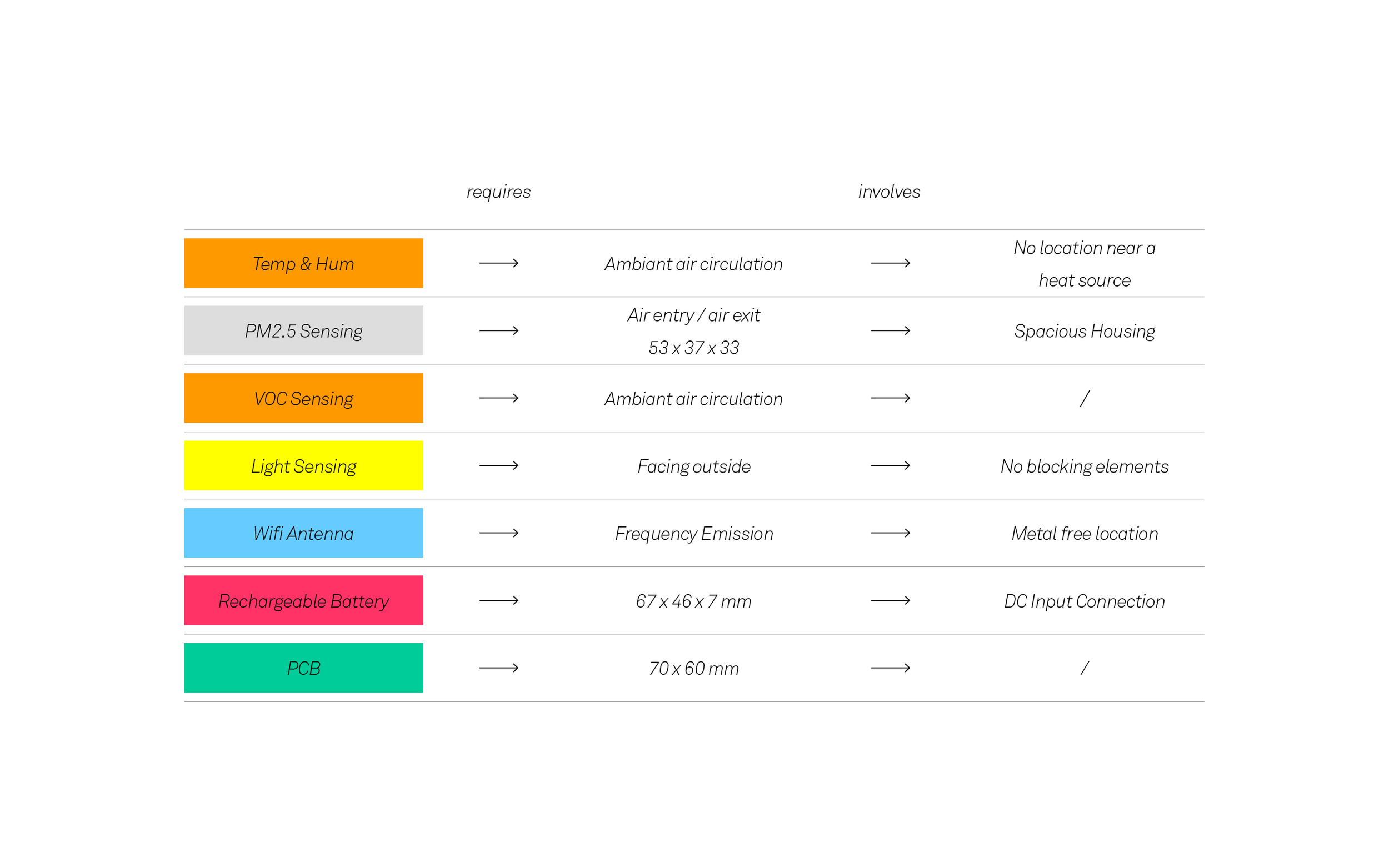
Creating an effective air quality monitor required solving multiple technical and design challenges simultaneously. The device needed to integrate several different sensor types—particulate matter sensors using laser scattering or other detection methods, VOC sensors typically based on metal oxide semiconductors, temperature sensors, and humidity sensors. Each sensor type has different power requirements, response times, calibration needs, and environmental sensitivities.
Particulate matter sensing presented particular challenges. PM sensors need to draw air through the detection chamber at consistent rates while avoiding contamination buildup that degrades accuracy over time. The sensors must distinguish between different particle sizes (PM2.5 and PM10), which have different health implications. All this needed to happen in a compact consumer device rather than a laboratory instrument.
VOC measurement involves detecting a wide range of organic compounds with varying molecular weights and detection thresholds. Consumer VOC sensors typically provide an aggregate reading rather than identifying specific compounds, requiring careful calibration to provide meaningful data across the range of common indoor pollutants.
Power management was critical. The device needed to run continuously to provide ongoing monitoring, yet remain energy-efficient enough for reasonable battery life or minimal power consumption when plugged in. Sensor sampling rates had to balance data resolution with power consumption. Wireless connectivity for smartphone communication added another power draw requiring optimization.
Data accuracy and reliability posed ongoing challenges. Environmental sensors can drift over time, requiring calibration strategies. Temperature and humidity affect sensor performance, necessitating compensation algorithms. We needed to ensure readings remained accurate across the wide range of conditions found in typical homes—from steamy bathrooms to dry bedrooms, from cool basements to warm kitchens.
From a user experience perspective, we faced the challenge of presenting complex environmental data in ways that were understandable and actionable for non-technical users. Numbers like "42 µg/m³ PM2.5" mean little to most people. We needed to translate sensor readings into intuitive visualizations that communicated whether air quality was good, concerning, or poor, and what actions users might take to improve conditions.
Portability requirements meant the device couldn't be large or heavy. Users needed to move it easily between rooms to monitor different spaces. The form factor needed to work aesthetically in home environments—visible enough to access and monitor, yet unobtrusive enough to fit naturally into living spaces without being an eyesore.
Finally, the smartphone application needed to handle data reception, storage, visualization, and historical tracking while remaining simple enough for everyday use. The app needed to work reliably across different smartphone platforms and handle connectivity interruptions gracefully.


Our Approach
As an in-house project, Mustard Air Sensor gave us freedom to experiment with emerging technologies and design approaches without the constraints of specific client requirements. We used this opportunity to push boundaries in sensor integration, IoT connectivity, and data presentation.
Sensor Integration and Calibration
We began by researching and testing various sensor technologies for each measurement parameter. For particulate matter detection, we evaluated laser scattering sensors that could differentiate PM2.5 and PM10 levels. These sensors use laser beams to detect particles passing through an air chamber, with scattered light intensity and patterns indicating particle size and concentration.
VOC sensing utilized metal oxide semiconductor sensors that change electrical resistance when exposed to organic compounds. We calibrated these sensors against known VOC sources to establish baseline readings and response curves. Temperature and humidity sensors provided environmental context and allowed compensation for environmental effects on other sensors.
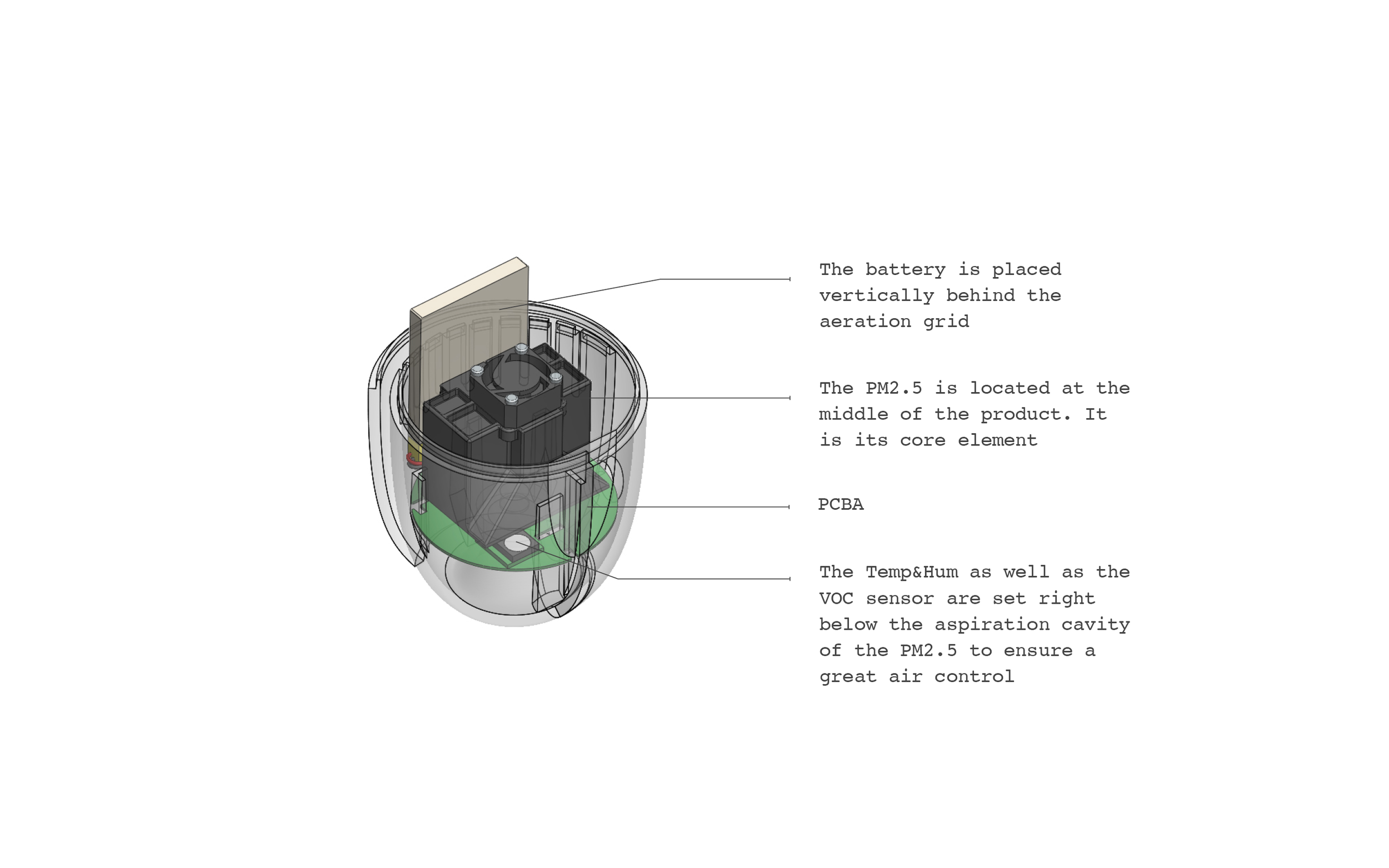
The integration challenge involved positioning sensors to ensure adequate airflow without creating interference between sensors. We designed internal airflow patterns that drew ambient air through the detection chamber naturally, avoiding the need for noisy or power-hungry fans while still ensuring consistent sampling.
Calibration algorithms compensated for temperature and humidity effects on sensor readings. We developed baseline establishment procedures that allowed the device to adapt to its specific environment over the first days of operation, improving accuracy for local conditions.
Industrial Design: Form Meets Function
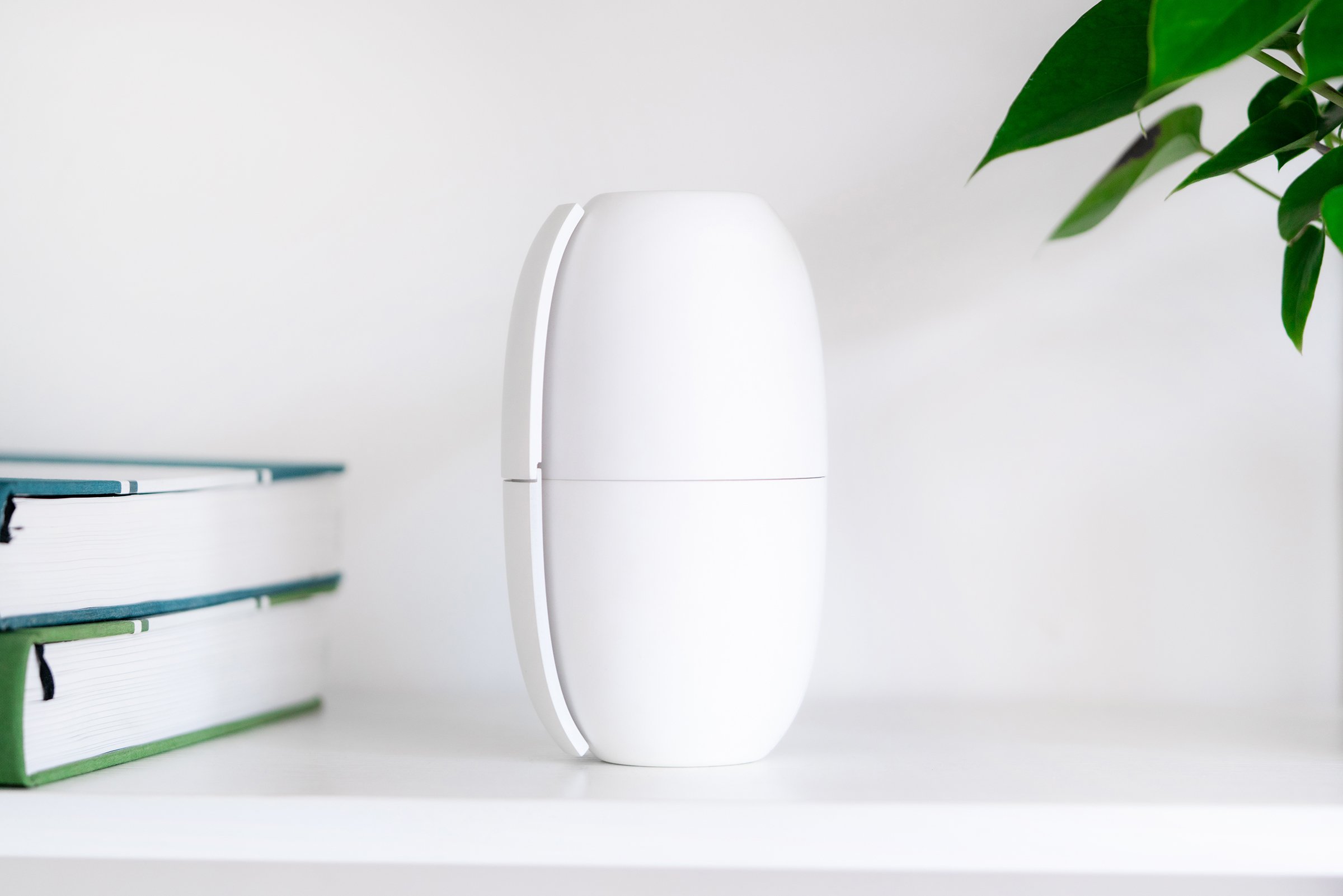
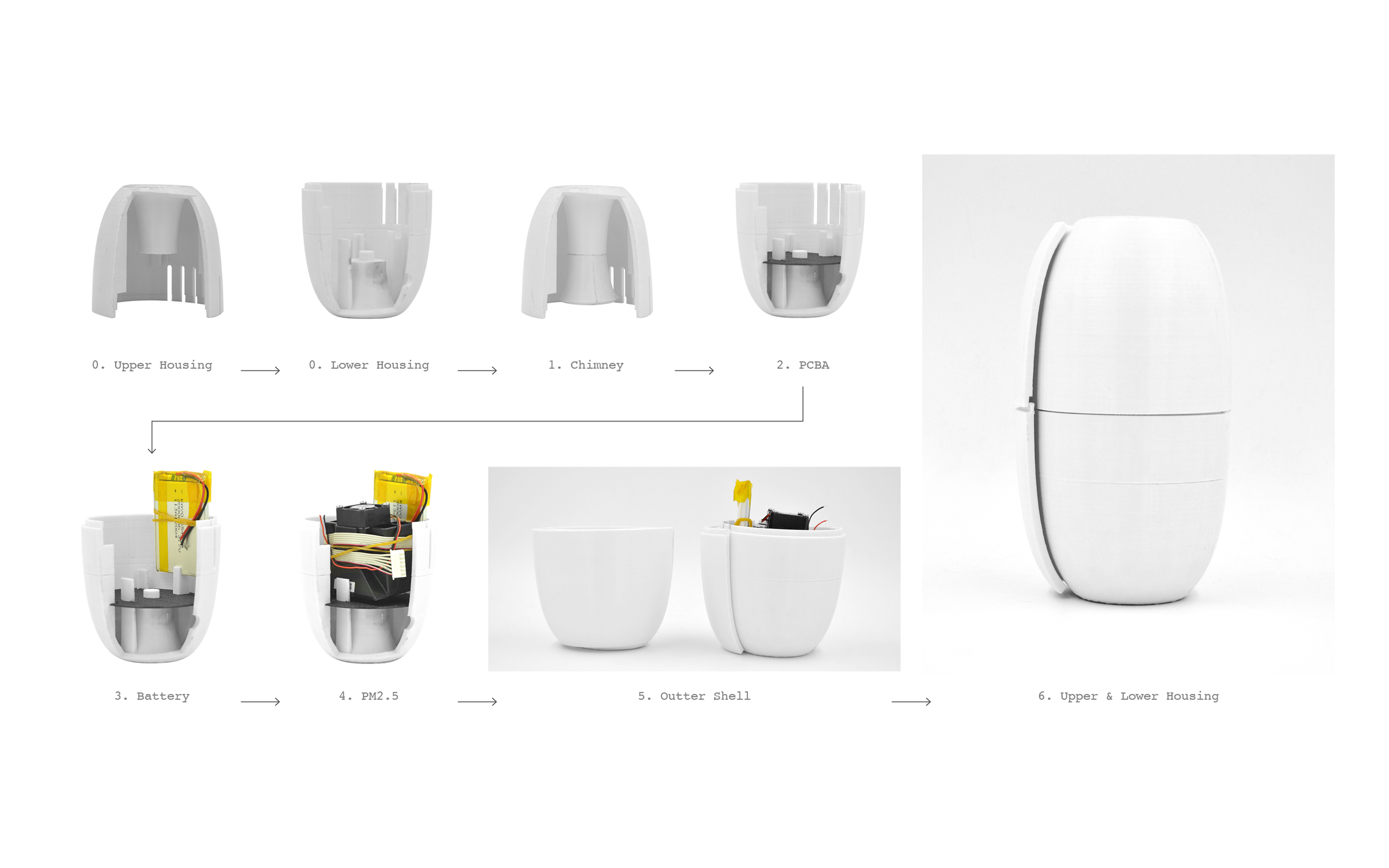
The physical design balanced functional requirements with aesthetic considerations. The compact form needed to house multiple sensors, electronics, battery or power supply, and wireless connectivity while remaining visually appealing for home use.
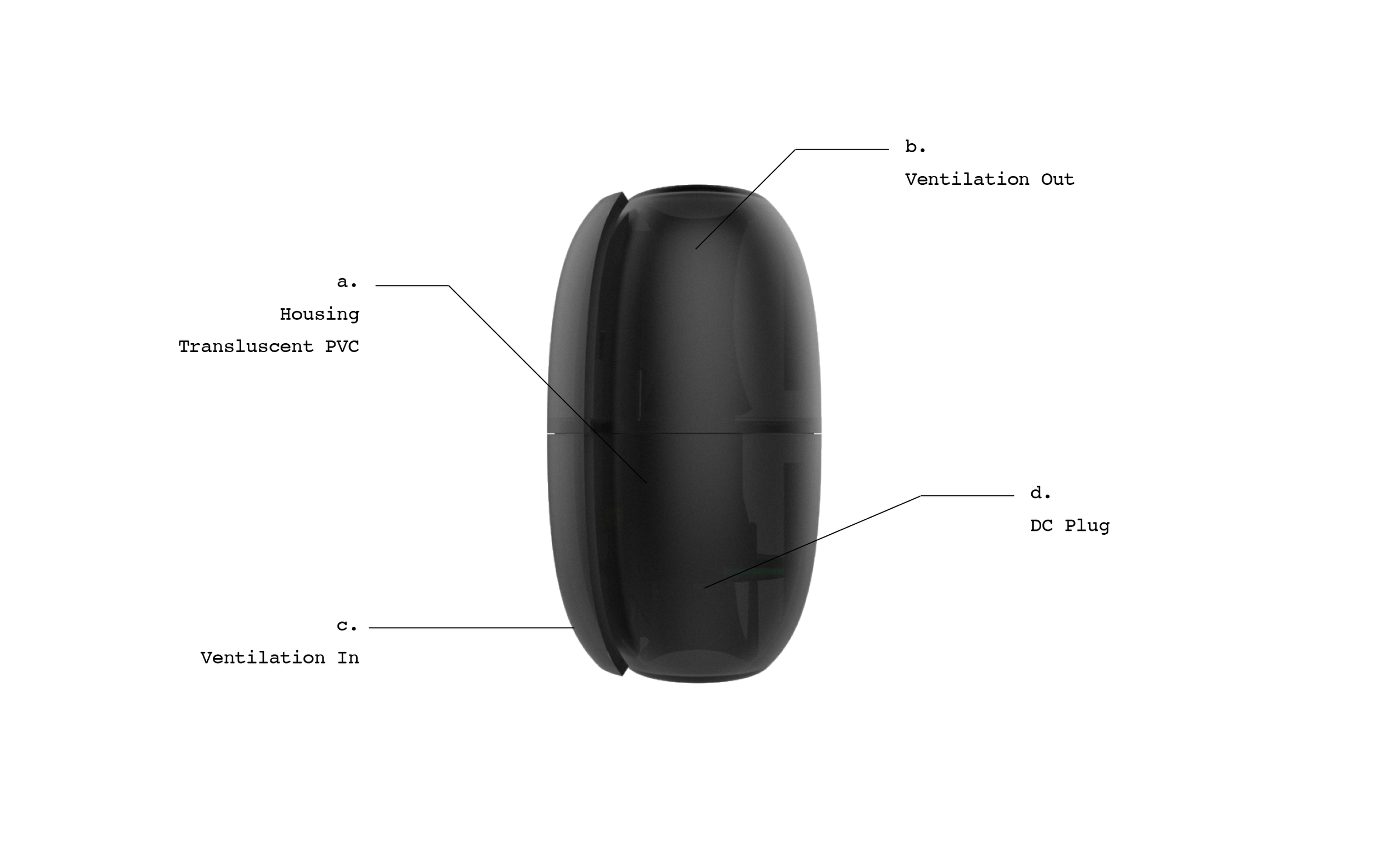
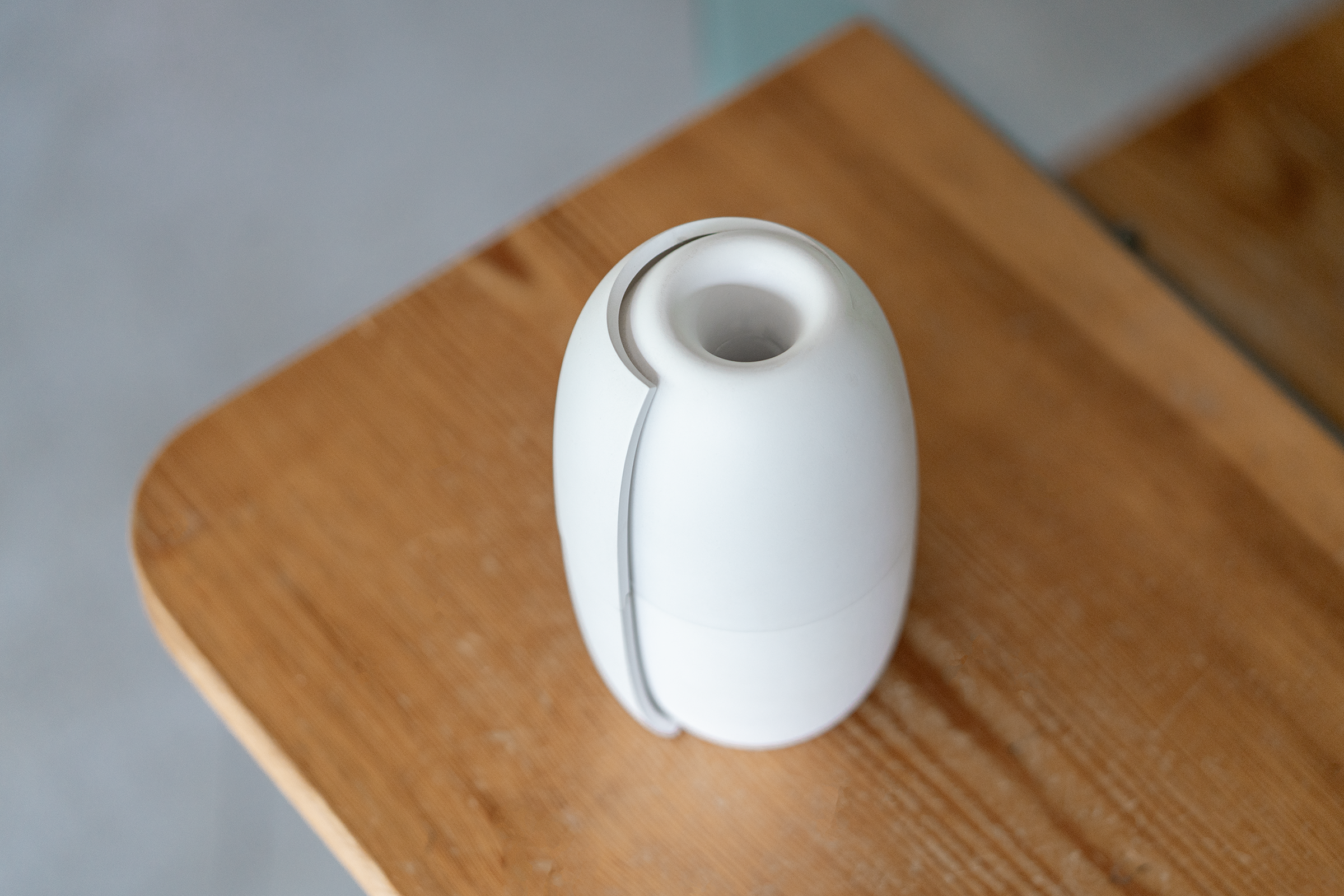
We created a clean, minimalist design that could sit unobtrusively on a shelf, desk, or nightstand. Ventilation openings allowed airflow for sensor sampling while being integrated into the design language rather than looking like purely functional features. The form was light enough for easy portability yet stable enough not to tip easily.
Indicator lights provided at-a-glance status—power status, connectivity, and a simple color-coded air quality indication. This allowed users to see basic status without opening the app, while detailed data remained available through smartphone connectivity.
Electronics and Connectivity
The electronics architecture centered on a low-power microcontroller managing sensor sampling, data processing, and wireless communication. We implemented Bluetooth Low Energy for smartphone connectivity, providing reliable communication within typical home ranges while minimizing power consumption.
Power management involved intelligent sensor sampling—reading sensors at intervals sufficient for meaningful data while avoiding unnecessary power drain. The system used sleep modes between sampling periods, with the wireless module activating only when transmitting data or responding to app queries.
Data processing happened on-device, with the microcontroller applying calibration curves, compensation algorithms, and basic analysis before transmitting to the smartphone. This approach reduced data transmission requirements and allowed the device to operate semi-independently, storing data locally when the smartphone wasn't in range.
Smartphone Application
The companion app provided the user interface for air quality monitoring. We designed visualizations that translated complex sensor data into intuitive displays. Color-coded indicators showed at-a-glance whether air quality was good (green), moderate (yellow), or poor (red) for each measured parameter.
Historical data tracking showed trends over time—daily patterns, weekly averages, changes corresponding to activities like cooking or cleaning. This temporal view helped users understand how their activities and habits affected air quality, empowering informed decisions about ventilation, product choices, or activity timing.
The app provided educational content explaining what each parameter meant for health and well-being. When measurements indicated poor air quality, the app suggested potential causes and improvement actions—opening windows for ventilation, checking air filters, identifying potential VOC sources, adjusting humidity levels.
Prototyping and Testing
We built multiple prototype iterations, testing in various home environments to understand real-world performance. We monitored kitchens during cooking to see particulate spikes, bedrooms during sleep to understand overnight air quality patterns, and bathrooms to track humidity effects.
This testing revealed insights about sensor placement—height above floor, distance from walls, proximity to windows and doors all affected readings. We refined the app's guidance for optimal sensor placement based on these findings. We also discovered the importance of trend data over instantaneous readings—short-term spikes were less meaningful than sustained elevated levels.


The Solution
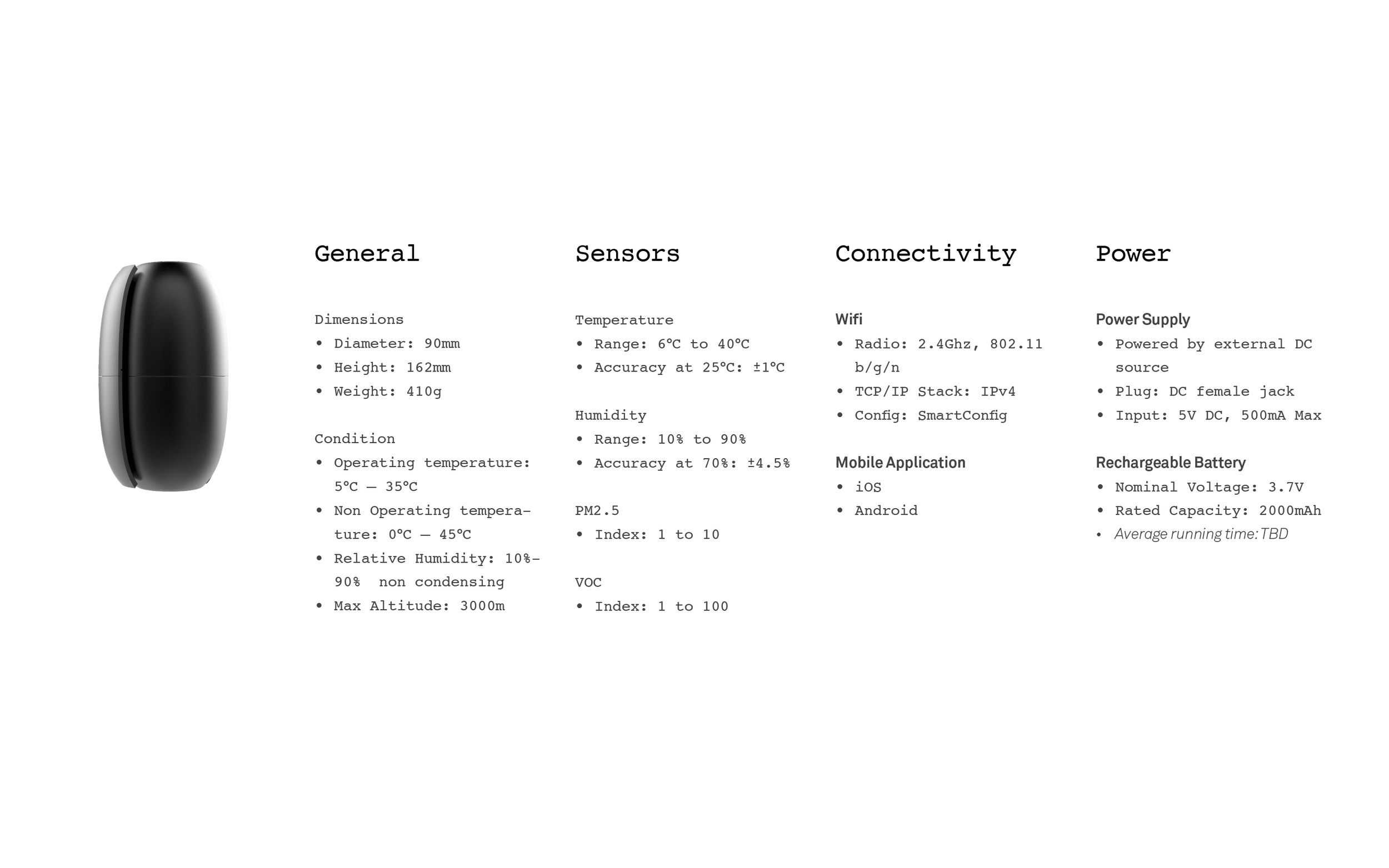
The final Mustard Air Sensor delivered comprehensive indoor air quality monitoring in a consumer-friendly package. The compact device measures particulate matter (PM2.5 and PM10), volatile organic compounds, temperature, and humidity, providing a complete picture of indoor air conditions.
Multi-Parameter Monitoring gives users visibility into multiple aspects of air quality simultaneously. Particulate matter readings indicate smoke, dust, and combustion particles. VOC measurements detect organic compounds from products, materials, and activities. Temperature and humidity provide environmental context affecting comfort and air quality perception.
Smartphone Connectivity via Bluetooth allows real-time monitoring and historical data access through an intuitive app. Users can check current conditions, view trends over days or weeks, and receive alerts when air quality deteriorates beyond healthy thresholds.
Portable Design means users can move the sensor between rooms to monitor different spaces—checking the nursery during baby's sleep, monitoring the kitchen during cooking, assessing bedroom air quality overnight, or measuring basement conditions. This portability provides comprehensive home monitoring without requiring multiple devices.
Actionable Insights transform raw data into understanding and action. The app doesn't just show numbers—it explains what they mean, identifies potential causes of poor air quality, and suggests specific improvement actions users can take.
The Result
Mustard Air Sensor successfully demonstrated that indoor air quality monitoring could be accessible, understandable, and actionable for everyday consumers. The project validated key assumptions about the market opportunity and technical feasibility of consumer air quality devices.
Users who tested prototypes reported increased awareness of factors affecting their indoor air—discovering that cooking generated significant particulate matter, that certain cleaning products spiked VOC levels, that humidity varied dramatically between rooms, or that their bedroom air quality degraded overnight without adequate ventilation.
This awareness led to behavioral changes: opening windows during and after cooking, choosing lower-VOC cleaning products, using exhaust fans more consistently, or adjusting HVAC settings to improve ventilation. The device transformed invisible air quality into visible, measurable data that empowered informed decisions.
From a technical perspective, the project advanced our expertise in sensor integration, low-power IoT design, and environmental data visualization. We developed approaches to multi-sensor calibration, power-efficient continuous monitoring, and user-friendly data presentation that informed subsequent client projects involving environmental sensing.
The project also revealed market insights about consumer priorities in air quality monitoring—users cared most about particulate matter (especially in urban areas or homes with combustion appliances), valued simplicity over exhaustive data, and wanted actionable guidance rather than just measurements.
What We Learned
This in-house project provided valuable lessons that extended beyond air quality monitoring to IoT product development more broadly. We learned that sensor integration requires not just technical specifications but understanding real-world behavior—how sensors interact, how environmental conditions affect readings, and how placement impacts accuracy.
The importance of translating technical data into user understanding became crystal clear. Engineers naturally think in units and specifications, but users think in outcomes and actions. Bridging that gap through thoughtful data visualization and contextual guidance proved essential for creating value from sensors.
We discovered that continuous environmental monitoring reveals patterns invisible in spot checks. The temporal dimension—tracking how conditions change throughout days and weeks—provided insights that single measurements never could. This shaped how we approached data storage, visualization, and analysis in the application design.
Power management in always-on IoT devices requires optimization at every level. There's no single solution but rather hundreds of small decisions about sampling rates, wireless duty cycles, sleep modes, and data processing that collectively determine whether a device lasts days or months on a charge.
Finally, this project reinforced that in-house development projects serve valuable purposes beyond potential product launches. They allow exploration of emerging technologies, development of technical capabilities, and market validation that inform client work and position the company for future opportunities.

Our Expertise in Action
Mustard Air Sensor showcased Tektos Ecosystems' capabilities in IoT product development from concept through functional prototypes. This project required expertise across development study and market research, industrial design for consumer products, electronic design for multi-sensor integration, firmware development for data processing and connectivity, and prototyping for real-world validation.
Our team successfully integrated multiple sensor technologies into a cohesive system, developed power-efficient electronics supporting continuous monitoring, created firmware managing sensor calibration and data processing, designed intuitive smartphone applications for complex data visualization, and validated the complete system through extensive real-world testing.
The experience gained through Mustard Air Sensor directly benefited subsequent client projects involving environmental sensing, IoT connectivity, consumer electronics design, and data-driven user experiences. Whether you're developing environmental monitoring devices, consumer IoT products, health and wellness technology, or any system that turns invisible environmental factors into visible, actionable data, Tektos Ecosystems brings proven expertise in sensor integration, low-power design, connectivity solutions, and user-centered data presentation.
Ready to Bring Your IoT Vision to Life?
From environmental monitoring to smart home devices to industrial IoT, Tektos Ecosystems specializes in creating connected products that deliver genuine value. If you have an idea for an IoT device that could improve lives or solve real problems, we'd love to help make it a reality.