
How to Choose the Right Manufacturing Partner for Your Product?
Choosing the wrong manufacturing partner can delay your product launch by six to twelve months, erode your margins by 15–30%, and, in the worst cases, force a complete product redesign. For first-time founders and established brands alike, this decision carries more long-term weight than almost any other in the product development process.
A strong manufacturing partner does more than produce your product. They protect your intellectual property, identify engineering risks before they become expensive failures, and scale with you as demand grows. The wrong one introduces defects, misses deadlines, and damages your brand reputation with every shipment.
This guide walks you through the exact factors to evaluate, the questions to ask during vetting, and the red flags that should end a supplier's conversation immediately. You’ll also get a side-by-side comparison of local versus overseas manufacturing and a downloadable checklist you can bring into supplier calls.
As part of your broader launch strategy, this article complements our guide: Complete Product Development Process: From Idea to Launch (2026 Guide).
At Tektos Ecosystems, we’ve helped startups and global brands bring connected products to market through end-to-end product development, electronics engineering, and manufacturing support. Our European-managed teams across Hong Kong, Shenzhen, Manila, and Singapore specialize in IoT lifestyle electronics, mobile accessories, and connected devices, giving us firsthand visibility into the manufacturing risks that affect hardware companies at scale.
Why Choosing the Right Manufacturing Partner Matters
Your manufacturing partner influences far more than production costs. They affect product reliability, customer retention, launch timing, and your long-term operational flexibility.
A poor manufacturing decision creates compounding consequences. A delayed production run can postpone retailer onboarding, increase inventory carrying costs, and give competitors time to capture market share. Ensuring manufacturing quality and production readiness from the start prevents these costly delays.
For electronics and IoT device development and manufacturing, the stakes are even higher. Minor inconsistencies in PCB assembly, battery sourcing, or firmware flashing can create large-scale functional failures across entire product batches. In connected devices, manufacturing quality directly affects user experience, connectivity stability, and long-term reliability.
Crowdfunded hardware launches offer many cautionary examples. Several high-profile consumer electronics campaigns have missed delivery schedules by more than a year after underestimating manufacturing readiness, tooling complexity, or supply chain coordination.
Intellectual property protection also matters early in the process. Sharing CAD files, PCB layouts, firmware, or tooling specifications with the wrong supplier can expose your product to unauthorized reuse or supplier lock-in.
At Tektos Ecosystems, we frequently advise founders to evaluate manufacturers not only for pricing, but also for engineering collaboration, sourcing maturity, and scalability. The best manufacturing relationships improve product quality and operational efficiency over time.
Revenue loss
Production delays
Warranty exposure
Brand reputation damage
IP risk
How to Find and Shortlist Potential Manufacturers
Finding qualified manufacturers is harder than most founders expect. The challenge is not identifying suppliers, it’s identifying suppliers with relevant production experience and operational reliability.
Your goal should be to create a shortlist of five to ten qualified candidates before deeper vetting begins.
Online Directories and Marketplaces
Platforms like Thomasnet, Maker’s Row, Kompass, Alibaba, and Global Sources remain useful discovery tools.
Thomasnet works well for North American industrial suppliers.
Maker’s Row focuses on U.S.-based consumer product production.
Alibaba offers a large supplier volume but requires stronger vetting discipline.
Global Sources often includes more export-ready electronics manufacturers.
For IoT products and consumer electronics, directories should only be the starting point. PCB assembly capability, firmware integration support, and component sourcing experience rarely appear clearly in marketplace listings.
Trade Shows and Industry Events
Trade shows provide faster operational insight than email conversations alone.
Examples include:
Canton Fair
Global Sources Electronics Show
CES supplier exhibitions
MD&M West
Computex
These events allow you to compare manufacturing maturity, communication quality, and technical specialization directly.
Referrals and Industry Networks
Referrals from founders, sourcing specialists, and product engineers often produce better supplier leads than open marketplaces.
Industry Slack groups, LinkedIn communities, and accelerator networks can also uncover manufacturers with proven track records in connected devices and electronics production.
Sourcing Agents and Consultants
Sourcing consultants becomes valuable when:
your product is technically complex,
you’re manufacturing overseas for the first time,
or tooling investments exceed $25,000–$50,000.
Experienced sourcing teams help evaluate factories, coordinate audits, negotiate pricing, and oversee production quality.
For connected electronics products, many companies also benefit from working with integrated engineering and manufacturing firms that understand both hardware development and production scalability.
Related reading:
Industrial design process considerations
Prototype development best practices
Product development cost planning
Why IoT and Electronics Products Require Specialized Manufacturing Expertise
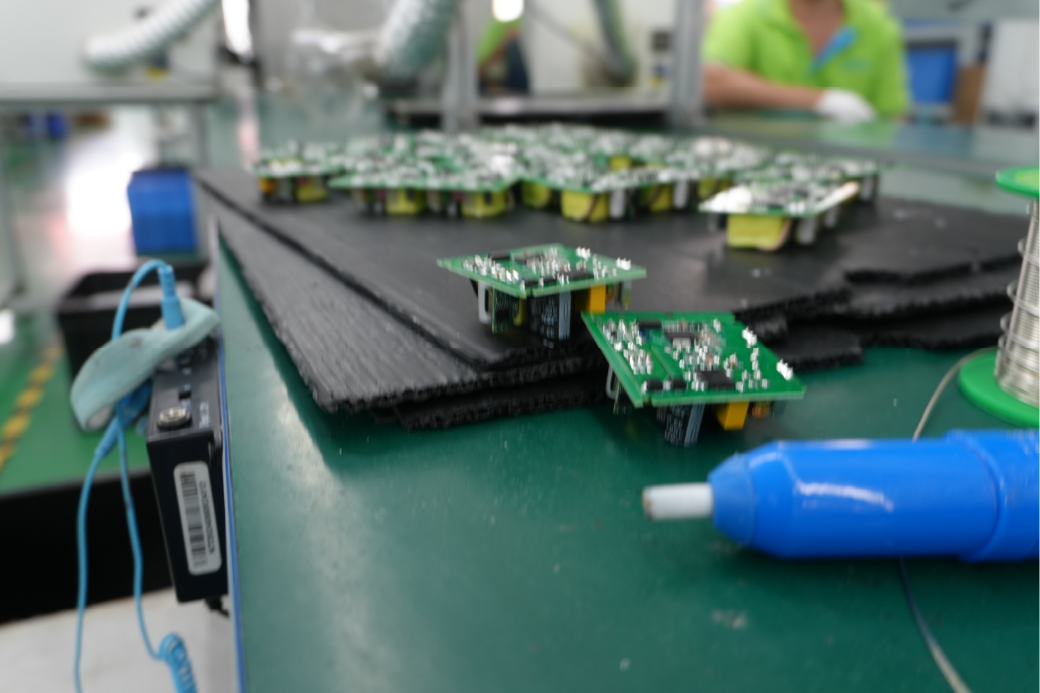
Consumer electronics and connected devices introduce manufacturing challenges that general-purpose factories may not manage effectively.
Unlike simple consumer goods, IoT products require coordination between electronic engineering processes, including PCB manufacturing and electronics engineering, firmware flashing, RF testing, battery certification, wireless compliance, enclosure tolerances, and final functional testing.
Even small inconsistencies in assembly can affect Bluetooth connectivity, charging performance, thermal management, or long-term reliability.
Many first-time hardware founders underestimate how engineering dependencies affect manufacturing scalability. A supplier may assemble products correctly while still lacking the systems needed for firmware validation, traceability, or component lifecycle management.
Tektos Ecosystems team often helps clients bridge this gap by aligning engineering validation, prototyping, and manufacturing readiness before mass production begins. This becomes especially important for connected consumer devices where electronics, software, and industrial design must function together consistently at scale.
Key Factors to Consider When Evaluating a Manufacturer

Industry Experience and Product Specialization
Manufacturers with direct experience in your category generally outperform generalists.
A factory experienced in consumer electronics understands PCB handling, ESD protection, battery integration, and component sourcing challenges that generic manufacturers may overlook. Ask for examples of comparable products and request references whenever possible.
For IoT devices, verify whether the manufacturer has experience with wireless products, firmware workflows, and electronics testing procedures.
Production Capabilities and Equipment
Evaluate both technical equipment and operational maturity.
Ask:
Which production processes are handled in-house?
Which processes are outsourced?
What testing equipment is available?
How recently has machinery been upgraded?
For electronics products, verify whether the supplier's modular manufacturing capabilities support:
SMT assembly
functional testing
firmware flashing
environmental testing
packaging integration
A factory operating near maximum utilization may also struggle during seasonal demand spikes.
Certifications and Compliance
Compliance requirements vary significantly by industry.
Common certifications include:
ISO 9001
ISO 13485
IATF 16949
RoHS
REACH
CE compliance
FCC testing support
FDA registration
For connected electronics products, compliance often extends beyond manufacturing into RF testing and battery certification requirements.
Always verify certification numbers directly.
Minimum Order Quantities (MOQs) and Pricing Structure
Lower MOQs reduce inventory risk but typically increase per-unit pricing.
Request clarity around:
tooling costs,
sample pricing,
engineering fees,
volume discounts,
and long-term pricing expectations.
Some electronics manufacturers can reduce MOQs if component sourcing timelines are stable and future production forecasts are predictable.
Lead Times and Production Capacity
Lead times affect cash flow, launch timing, and inventory planning.
For electronics manufacturing, component procurement often affects timelines more than final assembly itself. Semiconductor shortages, battery supply constraints, and chip allocation issues can extend schedules significantly.
Clarify:
prototype lead times,
tooling schedules,
component sourcing timelines,
first production timelines,
and reorder capacity.
Quality Control Systems
Strong manufacturers rely on documented quality systems rather than reactive inspections.
Look for:
incoming material inspections,
in-line QC checkpoints,
automated testing,
traceability systems,
and pre-shipment inspections.
In IoT manufacturing, functional testing is especially important. At Tektos Ecosystems, we commonly recommend pre-shipment validation for charging performance, wireless connectivity, firmware stability, and battery safety before products leave the factory.
Communication and Language
Communication quality becomes critical once production begins.
Evaluate:
response times,
technical clarity,
English proficiency,
escalation procedures,
and project management structure.
If communication feels inconsistent during early conversations, it usually worsens during production pressure.
Financial Stability
Financial instability creates operational risk. For larger engagements, request:
trade references,
years in operation,
banking references,
and ownership information.
This becomes increasingly important for tooling-heavy electronics projects where suppliers may hold expensive molds or custom fixtures.
Intellectual Property Protection
Protecting intellectual property begins before production starts.
Use:
mutual NDAs,
manufacturing agreements,
tooling ownership clauses,
and country-specific IP registrations.
For connected devices, IP protection should also address firmware, PCB layouts, and embedded software workflows.
Expert Perspective: Why Specialized Electronics Manufacturing Matters
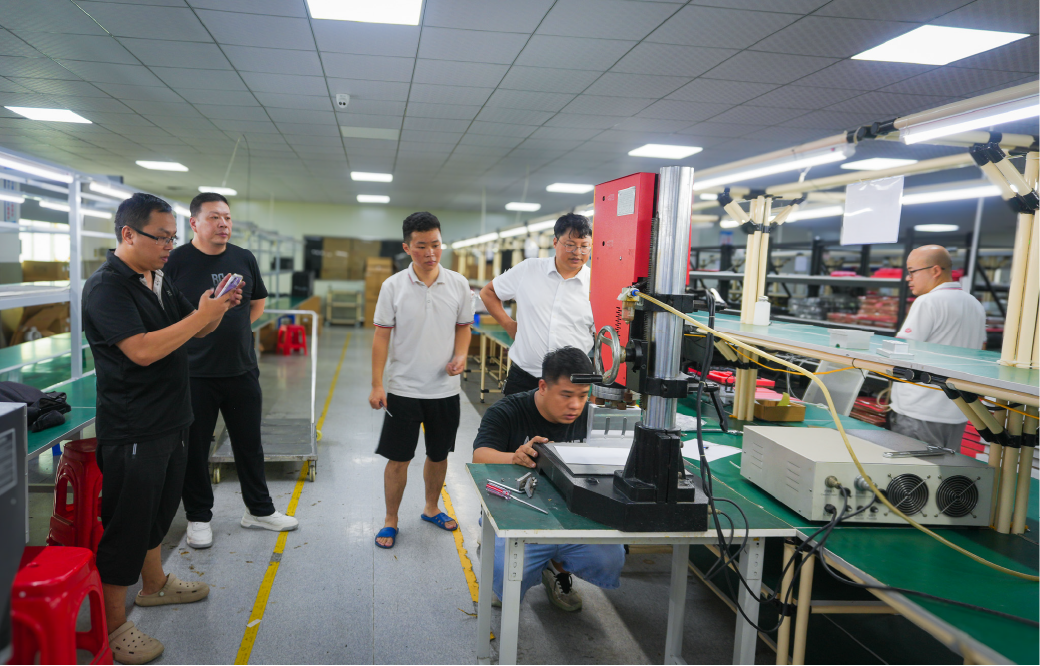
For IoT devices and connected electronics, manufacturing complexity extends far beyond assembly quality. Suppliers must also manage firmware flashing, PCB validation, wireless testing, battery compliance, and component traceability.
At Tektos Ecosystems, we frequently see first-time hardware founders underestimate how these engineering dependencies affect manufacturing timelines, certification requirements, and long-term product reliability.
Questions to Ask Manufacturers (Complete Vetting Checklist)
Capabilities and Experience
How long have you manufactured products in this category?
Can you share examples of similar products?
Which production processes are handled in-house?
What is your current production capacity?
Quality Assurance
Which certifications do you currently hold?
What defect rates do you typically see?
Do you allow third-party inspections?
How do you handle defective units?
Pricing and Terms
What are your MOQs?
How are tooling and sample costs structured?
What are your payment terms?
How are future price increases managed?
Timelines and Logistics
What are your prototyping timelines?
How do you handle production delays?
Do you manage shipping and export documentation?
Communication and Relationship
Who will be my primary contact?
What is your average response time?
How frequently are production updates shared?
Compliance and IP
Will you sign an NDA and manufacturing agreement?
Who owns tooling after production?
How do you prevent unauthorized reuse of designs?
The Vetting Process: Samples, Site Visits, and Audits
Requesting and Evaluating Samples
Paid samples reveal far more than supplier presentations.
Compare manufacturers across:
build quality,
packaging,
tolerances,
electronics reliability,
and assembly consistency.
For connected devices, functional testing matters as much as cosmetic quality. Test wireless connectivity, charging reliability, button responsiveness, and firmware stability across multiple units.
Conducting a Site Visit
Factory visits provide operational insight that spreadsheets cannot.
Inspect:
workflow organization,
equipment condition,
ESD-safe handling procedures,
worker conditions,
warehouse systems,
and QC documentation.
For electronics facilities, verify whether assembly lines support traceability and functional testing.
If international travel is impractical, request a live video walkthrough rather than prerecorded footage.
Third-Party Factory Audits
For larger production runs, third-party audits reduce supplier risk significantly. Common providers include:
SGS
Bureau Veritas
QIMA
Intertek
Audits become increasingly valuable when tooling investments or initial inventory exposure exceed $50,000.
Reference Checks
Always speak directly with existing customers.
Ask:
Were deadlines consistent?
How were defects handled?
Did pricing remain stable?
Would they use the supplier again?
Do not rely only on references selected by the manufacturer.
Red Flags to Watch Out For
| Red Flag | What It Might Mean | What to Do |
|---|---|---|
| Slow or inconsistent communication | Poor operational management | Walk away early |
| Refusal to share references | Inexperience or client disputes | Request three references |
| Vague pricing | Weak cost discipline | Demand itemized quotes |
| No verifiable certifications | Compliance exposure | Verify certification numbers |
| No physical address | Trading company posing as factory | Verify business registration |
| Unrealistic pricing or timelines | Corners will likely be cut | Compare multiple quotes |
| Pressure to commit quickly | Desperation or scam risk | Insist on samples first |
| Refusal to sign NDAs | High IP exposure risk | Disqualify immediately |
Local vs. Overseas Manufacturing: Which Is Right for You?
| Factor | Local Manufacturing | Overseas Manufacturing |
|---|---|---|
| Unit Cost | Higher, usually a 20–60% premium | Lower at scale |
| Lead Time | Typically 2–6 weeks | Typically 6–16 weeks, including shipping |
| Minimum Order Quantities | Lower and flexible | Higher MOQs common |
| Quality Control | Easier in-person oversight | Requires remote QC systems |
| Communication | Shared language and time zone | Time zone barriers common |
| IP Protection | Stronger legal recourse | Varies by country |
| Shipping and Logistics | Simpler logistics | Customs and tariff complexity |
| Scalability | Limited in some categories | Deep manufacturing capacity |
The right manufacturing model depends on your product complexity, funding stage, and scaling goals.
Many electronics brands now use hybrid production strategies. Early prototypes may be developed locally for faster iteration, while mass production moves to manufacturing hubs like Shenzhen or Southeast Asia once designs stabilize.
Mexico, Vietnam, India, and Eastern Europe are also becoming increasingly important manufacturing alternatives as companies diversify supply chains beyond China.
As a European-managed product development and manufacturing company operating across Hong Kong, Shenzhen, Manila, and Singapore, Tektos Ecosystems often helps clients balance engineering collaboration, manufacturing scalability, and regional sourcing flexibility when building connected consumer products.
Understanding Contracts, NDAs, and Tooling Ownership
Non-Disclosure Agreements (NDAs)
Use mutual NDAs before sharing designs, firmware, or technical documentation.
The agreement should clearly define:
confidential information,
permitted usage,
jurisdiction,
and ownership rights.
Manufacturing Service Agreements (MSAs)
An MSA establishes operational expectations and reduces ambiguity during production. Key clauses include:
pricing terms,
quality standards,
delivery obligations,
liability limitations,
and termination rights.
Tooling and Mold Ownership
Tooling ownership is one of the most overlooked manufacturing risks. Your contract should define:
who owns molds and tooling,
transfer rights,
storage obligations,
and maintenance responsibilities.
Without explicit ownership language, factories may refuse tooling transfers later.
Payment Terms
Standard manufacturing terms are often:
30% upfront,
70% before shipment.
Longer-term relationships may negotiate milestone payments or net terms over time.
Building a Long-Term Manufacturing Relationship
The strongest manufacturing relationships improve operational performance over time.
Reliable suppliers eventually become collaborative problem-solvers rather than transactional vendors. They help identify cost optimizations, improve quality systems, and support scaling during demand growth.
At Tektos Ecosystems, we typically recommend starting with smaller production runs before scaling aggressively. This approach validates communication quality, engineering coordination, and production consistency while reducing financial exposure.
You should also consider maintaining a secondary manufacturing option once production volumes increase. Backup suppliers reduce operational risk during shortages, geopolitical disruptions, or sudden demand spikes.
Regular forecasting reviews and structured communication cadences help maintain alignment as your business grows.
Conclusion and Next Steps
Choosing the right manufacturing partner is one of the highest-leverage decisions in the entire product development process. A structured evaluation framework consistently outperforms gut instinct, especially for electronics and connected products where engineering and manufacturing must operate closely together.
The best manufacturing relationships improve product quality, operational resilience, and long-term scalability over time.
If you’re developing an IoT device, mobile accessory, or connected consumer product, Tektos Ecosystems can help you navigate sourcing, engineering validation, prototyping, and manufacturing readiness. Our teams across Asia support startups and global brands throughout the full product development lifecycle, from concept development through mass production.
Frequently Asked Questions
-
To verify that a manufacturer is legitimate, check government business registries, validate certification numbers, conduct reference calls with existing clients, and commission a third-party factory audit through providers like SGS or QIMA before placing a large order.
-
Overseas manufacturing often lowers unit costs at scale, but total landed costs can narrow the gap. Shipping, tariffs, quality control, and longer lead times may offset savings, especially for smaller or complex production runs.
-
The certifications you need depend on your industry. ISO 9001 is common for general manufacturing, while medical products require ISO 13485 and automotive suppliers typically require IATF 16949. Electronics products may also require RoHS, REACH, FCC, or CE compliance.
-
Onboarding a manufacturer typically takes three to six months. This includes supplier vetting, sample development, contract negotiation, tooling preparation, and first production runs before full-scale manufacturing begins.
-
A contract manufacturer builds products using your specifications and designs. An OEM typically designs and manufactures products that other companies rebrand and sell under their own name.
-
Protect intellectual property by filing patents and trademarks in the manufacturing country, using NDAs and manufacturing agreements, clarifying tooling ownership, and working only with suppliers that have verifiable operational histories and references.
-
Typical payment terms are 30% upfront and 70% before shipment. Larger or long-term relationships may negotiate milestone-based payments or net payment terms after a successful production history.
-
Handle quality issues by documenting defects carefully, referencing manufacturing agreement quality clauses, and requesting corrective action plans. Many companies also use third-party inspections before future production runs to prevent recurring issues.