
AirComfort: Temperature & Humidity Logger
Redefining Environmental Monitoring Through Thoughtful Design
YEAR
2016
CLIENT
AWARDS
German Design Award
Design For Asia Award
A’ Design Award
EXPERTISE
Development Study
Industrial Design
Electronic Design
PCBA Production
Firmware Development
Prototyping
Certification
Packaging Design
Testing & Qualification
Mass Production
UX & UI
Mobile App
OS PC Server APP
SDK
Project Overview
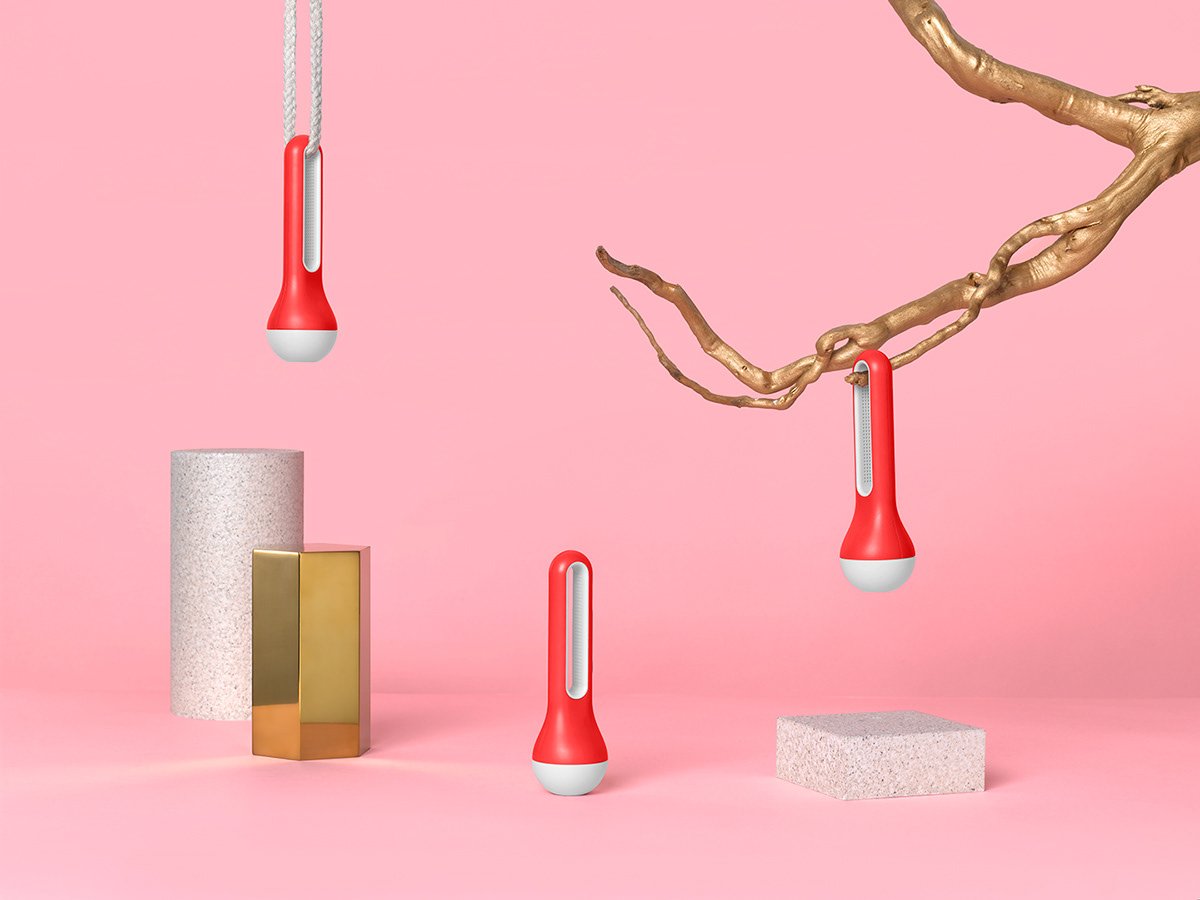
In 2016, Tektos Design set out to create something that seemed simple on the surface: a temperature and humidity sensor. But we weren't interested in making just another device to add to an already crowded market. We wanted to design something people would actually want to use—something that combined laboratory-grade precision with the kind of thoughtful design that makes technology feel approachable rather than intimidating.
AirComfort is designed for precise temperature and humidity tracking, paired with a complete mobile app and cloud service solution that lets users access their data from anywhere through wireless connectivity. Whether someone wants to monitor their home environment, optimize horticultural conditions, or enhance agricultural practices, we designed AirComfort to be versatile enough to handle it all while ensuring an ideal indoor environment.
Working closely with iBebot, we developed AirComfort from the ground up. Our collaboration spanned industrial design, electronics engineering, firmware development, mobile app creation, cloud infrastructure, and manufacturing. The result was a sensor that earned recognition from the German Design Award, Design for Asia Award, and A' Design Award—but more importantly, it became a tool that people genuinely trusted and enjoyed using in their daily lives.
The Challenge
The smart sensor market in 2016 was already saturated. Walk into any electronics store or browse online, and you'd find dozens of options for monitoring temperature and humidity. On one end of the spectrum were industrial-grade devices—accurate and reliable, but bulky, expensive, and designed for laboratories rather than living rooms. On the other end were consumer products that looked approachable but often sacrificed accuracy, battery life, or meaningful data insights.
Most sensors fell into a frustrating middle ground. They provided raw data but little context or usability. Their apps were afterthoughts, clunky interfaces that displayed numbers without helping users understand what those numbers meant. Many devices needed frequent battery replacements, disrupting the "set it and forget it" experience users wanted. Others lacked proper connectivity, requiring manual data downloads or offering spotty wireless performance.
For professional users in horticulture and agriculture, the options were even more limited. They needed serious accuracy and features like vapor pressure deficit calculations, but the devices offering these capabilities were expensive, complicated, and often required professional installation. Home users wanted something simple and attractive, but most consumer sensors couldn't deliver the precision needed for applications like preventing mold growth or optimizing indoor plant care.
The design language of existing sensors told another story. Most looked like gadgets—plastic boxes with screens and buttons that announced "I'm a piece of technology" rather than blending naturally into living spaces. People who cared about their home aesthetics often hid these devices rather than displaying them, which defeated the purpose of having visible environmental monitoring.
We saw an opportunity to bridge these gaps. What if we could create a sensor that offered professional-grade accuracy in a form people actually wanted to keep visible? What if the app experience made complex environmental data accessible and actionable? What if the device could run for a year on a single battery while maintaining continuous wireless connectivity?
The challenge wasn't just technical—it was about reimagining what an environmental sensor could be when design, engineering, and user experience received equal attention.
Our Approach
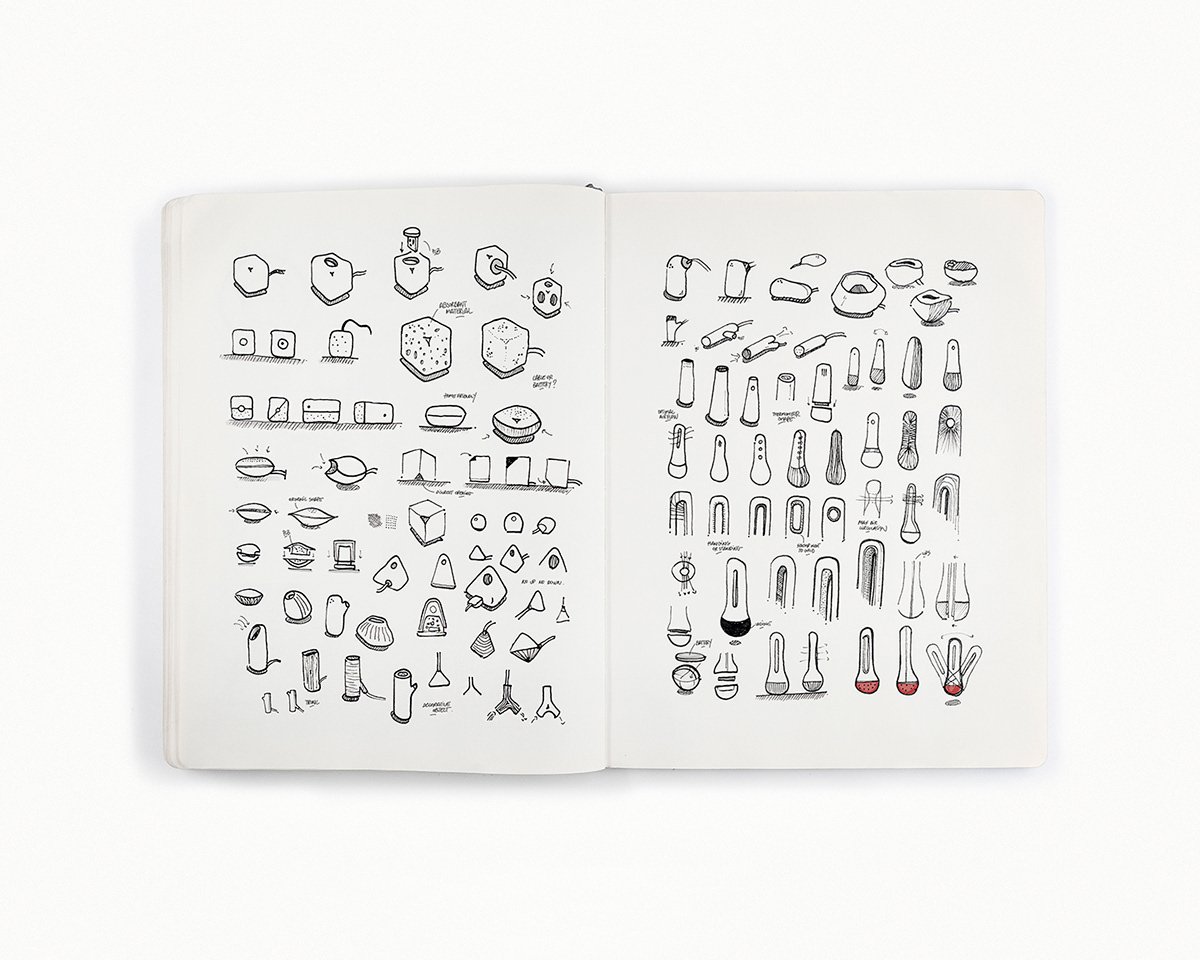
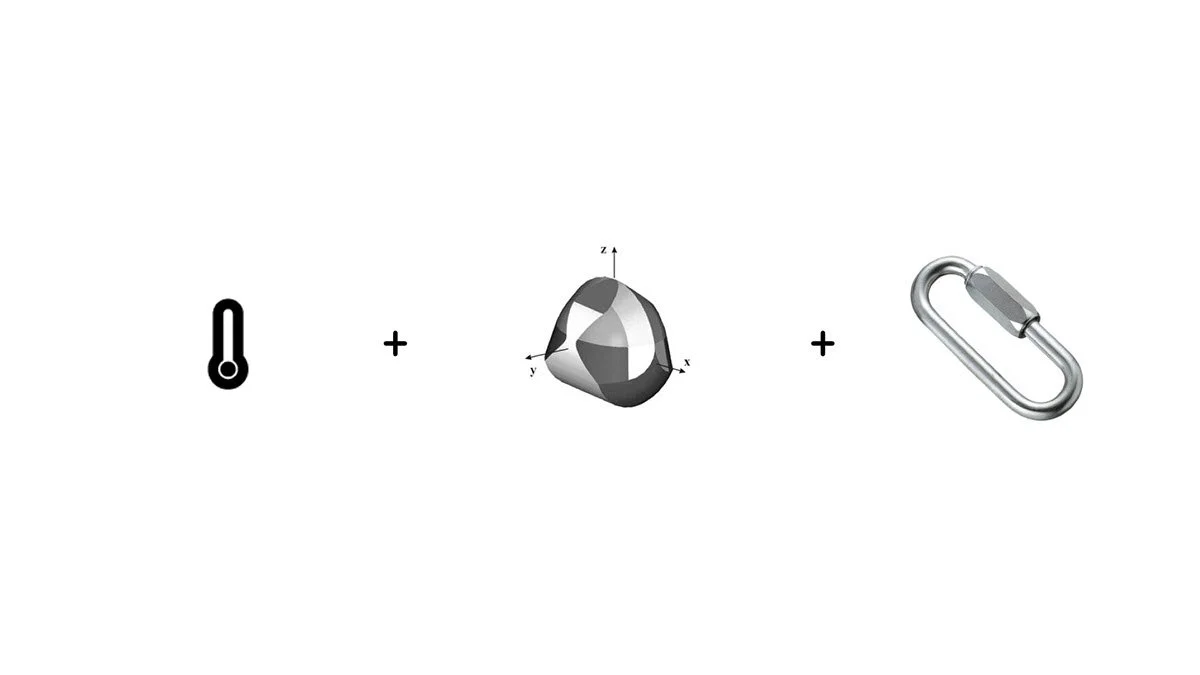
We began by questioning assumptions. Instead of defaulting to typical rectangular sensor designs, we looked for inspiration in objects that carried meaning and trust—the classic mercury thermometer with its vertical form, and the gömböc, a mathematical shape known for its perfect self-righting balance.
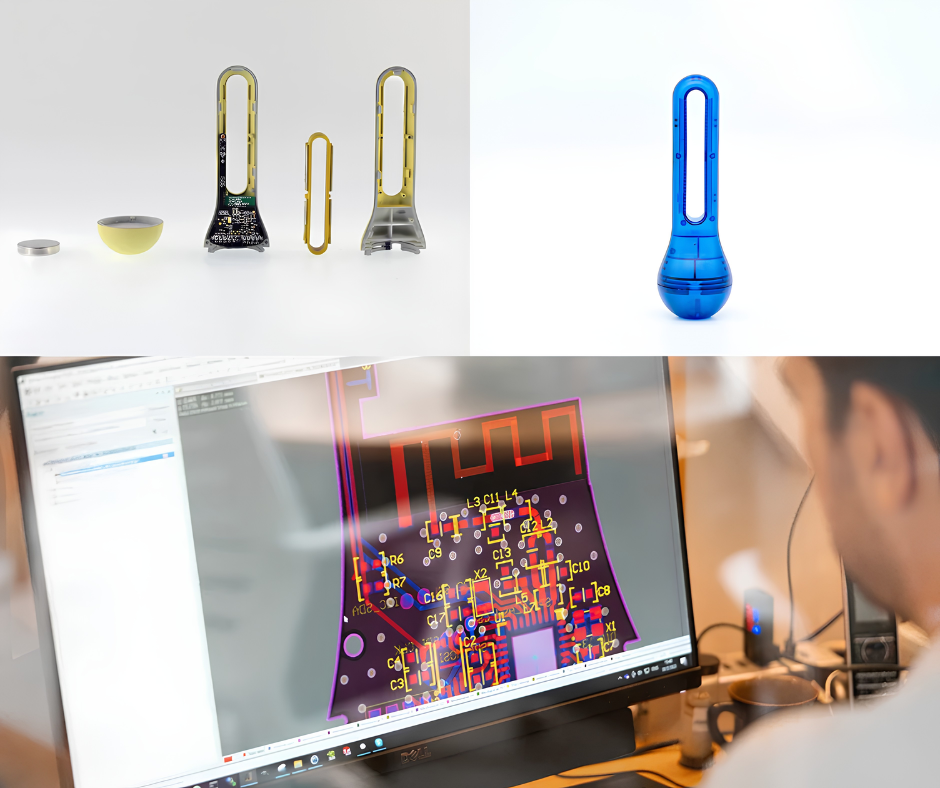
These inspirations led us to a smooth, vertical design that feels both familiar and fresh. The elongated oval form works equally well standing on a shelf or hanging from its integrated hook, adapting to different spaces naturally. We focused on creating a premium feel through durable materials while designing for disassembly rather than permanent assembly, making the device repairable and recyclable.
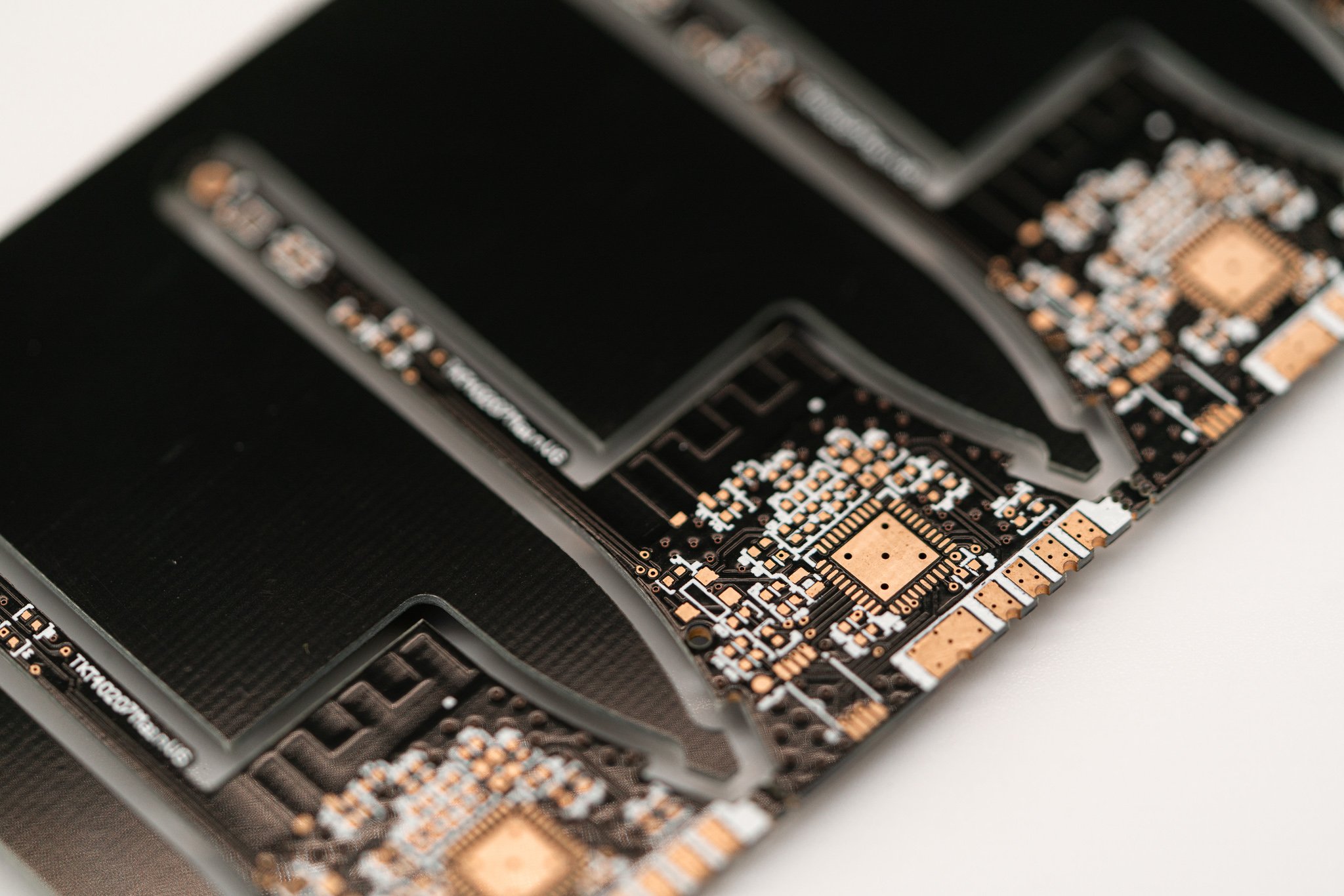
The electronics development required balancing multiple competing demands. We evaluated dozens of sensors, ultimately choosing components that delivered professional-grade accuracy in a compact package. Power management became a fascinating challenge—to achieve one year minimum battery life from a button cell, we implemented sophisticated sleep modes where the device wakes periodically to take readings and briefly enables Bluetooth for data synchronization.
Beyond simple temperature and humidity readings, we developed advanced environmental calculations. AirComfort measures Vapor Pressure Deficit (VPD) for monitoring plant growth, dew point for preventing dampness and mold, and Temperature-Humidity Index (THI) for tracking heat stress. These calculations turn raw sensor data into actionable information.
The mobile app development happened in parallel with hardware design. We focused on making complex environmental data accessible through clean visualizations and intuitive controls. Users can adjust measurement intervals from five to forty minutes, balancing data granularity with battery life based on their needs.
Field testing put AirComfort through real-world scenarios—apartments, greenhouses, wine cellars, server rooms, and agricultural facilities. Each environment taught us something valuable. When we compared AirComfort against competing products, it consistently outperformed market averages across accuracy, reliability, battery life, and user satisfaction.
The Solution
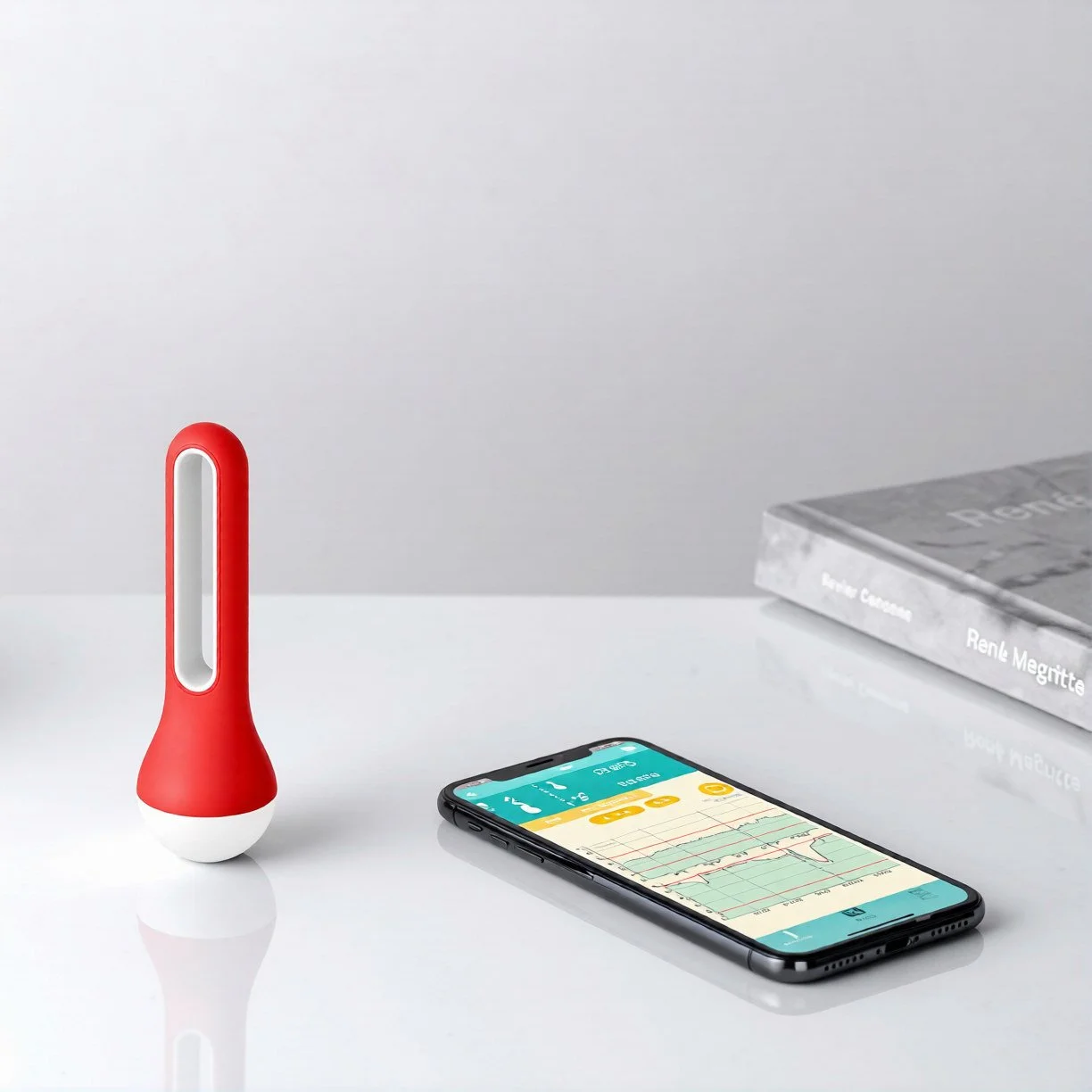
The final AirComfort embodies our vision of what environmental monitoring should be. At first glance, it's an elegant object that fits naturally into any space—just 35 grams and 115mm tall with a maximum diameter of 35.8mm. Its minimal design doesn't demand attention but invites curiosity. The smooth curves and balanced proportions make it pleasant to look at and handle, whether standing vertically on a surface or hanging from its integrated hook.
Connectivity
Bluetooth wirelessly sync with iOS and Android
Detection range: 10 meters (free field)
Battery Type: Button cell CR2450 (changeable)
Battery life: Minimum 12 months
Sensors
Temperature sensor range: -25°C to 70°C, accuracy at 25C: ±0.5°C
Humidity sensor range: 0% to 100%, accuracy at 70%: ±4.5°C
Measurement interval: 5mins to 40mins adjustable
Data storage amount: Up to 100 days (4032 sets)
Dimensions
Max Diameter 35.8mm, height 115.2mm
Net Weight: Approx. 35g
The sensor system inside delivers professional-grade performance. Temperature readings mean you can trust the data whether you're monitoring a wine cellar or a greenhouse. Humidity measurements provide the precision needed for mold prevention, humidor management, or plant care.
Bluetooth connectivity pairs effortlessly with iOS and Android devices. The companion app syncs automatically, pulling data into the cloud where users can access it from anywhere. Historical data storage means you can track long-term trends and patterns, identifying issues before they become problems.
The button cell battery design keeps AirComfort running for at least twelve months between changes. When replacement is needed, users can easily open the device without tools, swap the CR2450 battery, and continue monitoring. This user-serviceable design extends the product's life and reduces electronic waste.
The mobile app transforms raw sensor data into insights. Clean visualizations make trends obvious at a glance. Customizable alerts notify users when conditions fall outside desired ranges. Advanced metrics like VPD, dew point, and THI provide deeper understanding for specialized applications. The interface feels refined and intentional, with every feature serving a clear purpose rather than cluttering the screen with options.
The Result
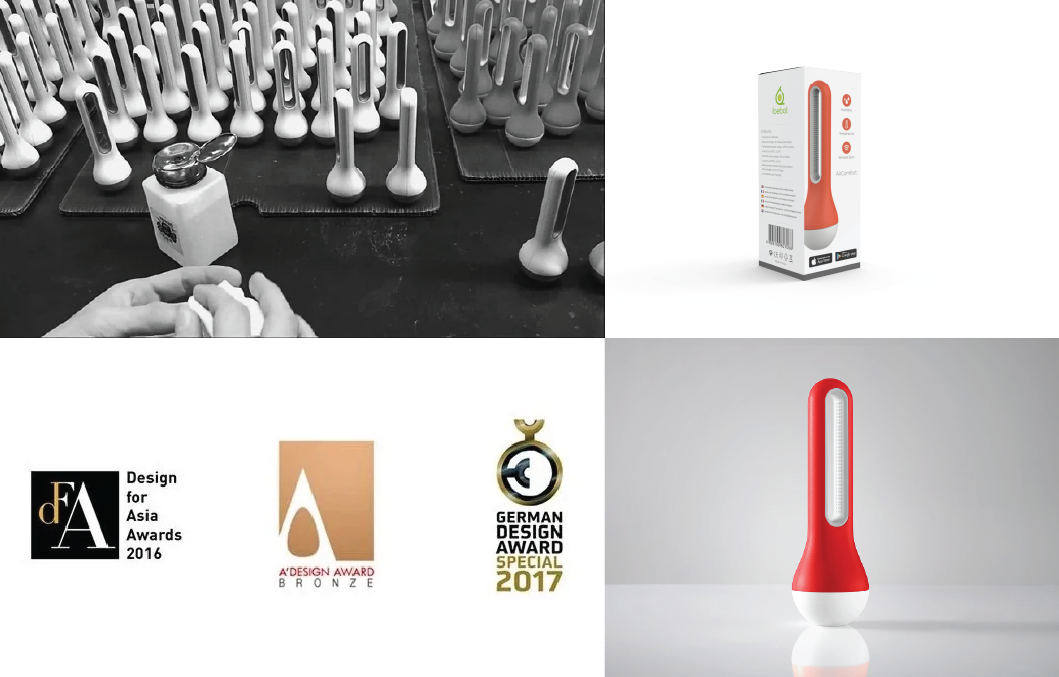
AirComfort achieved what we set out to create—a sensor that people actually wanted to use. The design awards validated our approach to industrial design, but the real success came from user adoption and satisfaction. People placed AirComfort in spaces where they'd previously hidden sensors or avoided monitoring altogether.
Professional users in horticulture and agriculture found that AirComfort delivered the accuracy they needed without the complexity or cost of traditional professional equipment. Home users appreciated having reliable environmental data without feeling like they needed an engineering degree to interpret it. The long battery life meant the device truly worked in the background, requiring minimal attention while providing continuous monitoring.
The advanced environmental calculations opened new use cases we hadn't initially anticipated. Cigar enthusiasts used AirComfort to maintain perfect humidor conditions. Winemakers monitored cellar environments. Pet owners tracked temperature and humidity for exotic animals with specific environmental needs. Musicians protected valuable wooden instruments from humidity damage. Each application demonstrated that thoughtful design creates value beyond the original intended use.
From a technical perspective, AirComfort proved that consumer devices could match professional accuracy when engineering received proper attention. The year-long battery life exceeded what most competing products offered by months. Bluetooth reliability remained consistent even in challenging environments. The cloud infrastructure handled data from thousands of devices without issues.
The recognition from German Design Award, Design for Asia Award, and A' Design Award affirmed that the design community saw what we were trying to achieve—that even utilitarian devices deserve beautiful, thoughtful design. But these awards were secondary to the primary goal: creating something genuinely useful that improved people's daily lives.
What We Learned
This project reinforced several lessons that continue to shape our work. First, inspiration can come from unexpected places. Looking beyond typical product categories to classic objects and mathematical forms led us to a distinctive design that stood out in a crowded market.
Second, sustainability doesn't have to compromise aesthetics or functionality. Designing for disassembly and repair added minimal complexity while significantly extending product life and reducing waste. Users appreciated being able to replace batteries without sending devices back to the manufacturer or buying entirely new units.
Third, the app experience deserves as much attention as hardware design. Many companies treat apps as afterthoughts, but in connected devices, the digital experience is half the product. Investing in thoughtful UI/UX design created an experience that made AirComfort more valuable and easier to use.
Finally, professional-grade performance can come in consumer-friendly packages. The assumption that accuracy requires industrial aesthetics or complexity is false. With careful engineering and design, you can deliver laboratory precision in a form that feels accessible and welcoming.
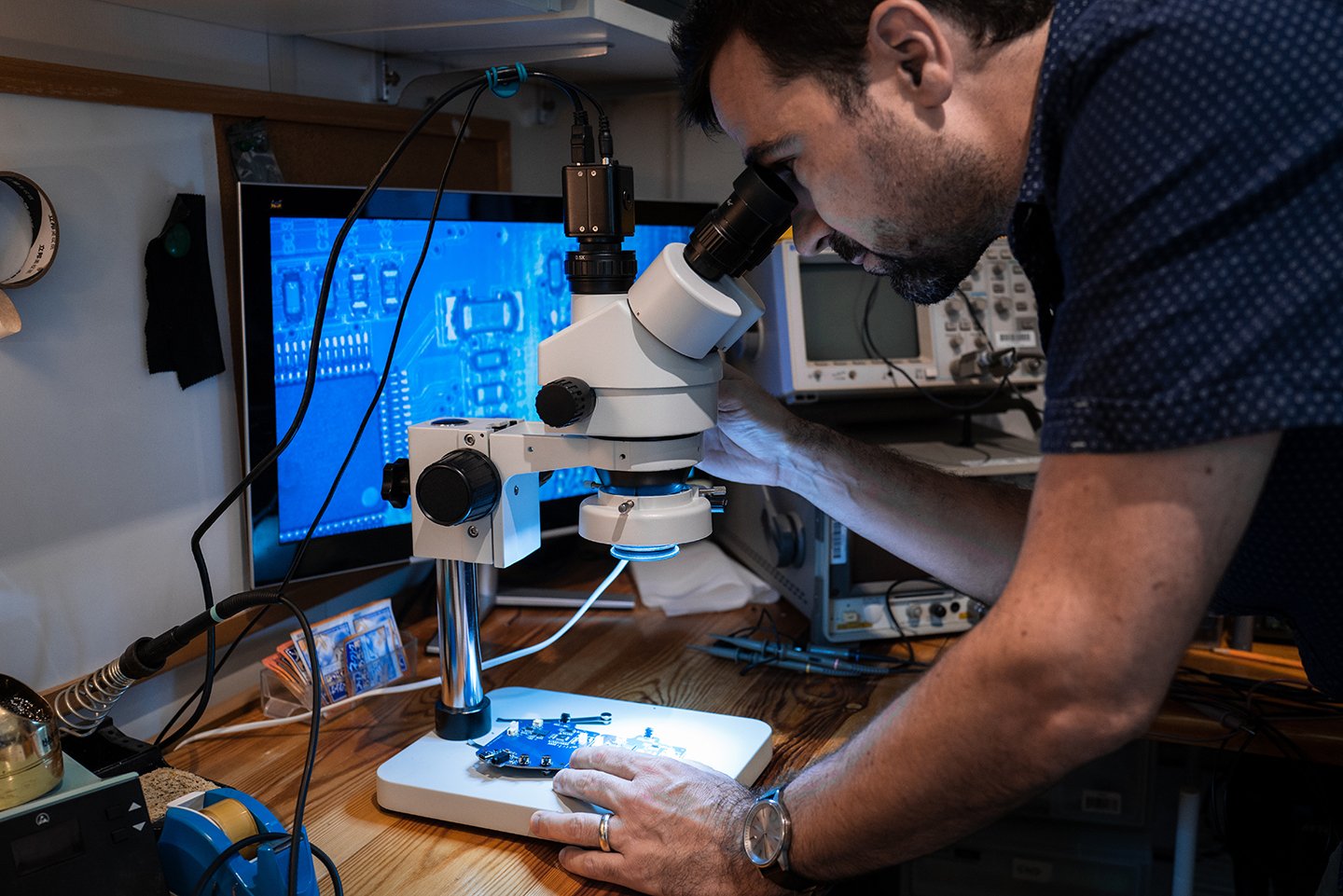
Our Expertise in Action
AirComfort showcases Tektos Design's ability to execute across the entire product development spectrum. We handled industrial design that won international recognition, electronic engineering that delivered professional accuracy, firmware development that optimized power consumption, mobile app creation that made data accessible, cloud infrastructure that scaled reliably, and manufacturing that maintained quality at volume.
The project demonstrates our commitment to user-centered design. Every decision, from form factor to feature set to interface design, started with understanding how people would actually use the device. This focus ensured that technical excellence served real human needs rather than existing for its own sake.
Perhaps most importantly, AirComfort reflects our belief that everyday objects deserve beautiful, thoughtful design. Temperature sensors aren't glamorous products, but that doesn't mean they should be ugly or frustrating to use. When design and engineering work together from the start, even humble devices can become objects people appreciate and enjoy.
Whether you're developing IoT sensors, smart home devices, or innovative hardware that needs to combine precision with approachable design, Tektos Design has the expertise to bring your vision to life.