
What Is Product Development? A Complete Beginner’s Guide

Product development is the process of transforming an idea into a tangible product that people can use, purchase, and benefit from. While the concept may sound straightforward, the journey from idea to market involves multiple stages, each requiring careful planning, technical expertise, and strategic decision-making.
For businesses, especially startups and growing companies, understanding product development is essential to minimizing risk and maximizing success. Without a structured approach, teams often encounter delays, unexpected costs, and products that fail to meet user expectations.
In today’s competitive market, it’s not enough to simply have a great idea. Companies must validate their concepts, refine their designs, and ensure their products are both functional and scalable. This is particularly true for hardware and electronics, where development complexity is significantly higher.
In this beginner-friendly guide, we’ll break everything down in simple terms, so you can confidently move forward and decide when to partner with a full-scale product development company.
What Does Product Development Mean?
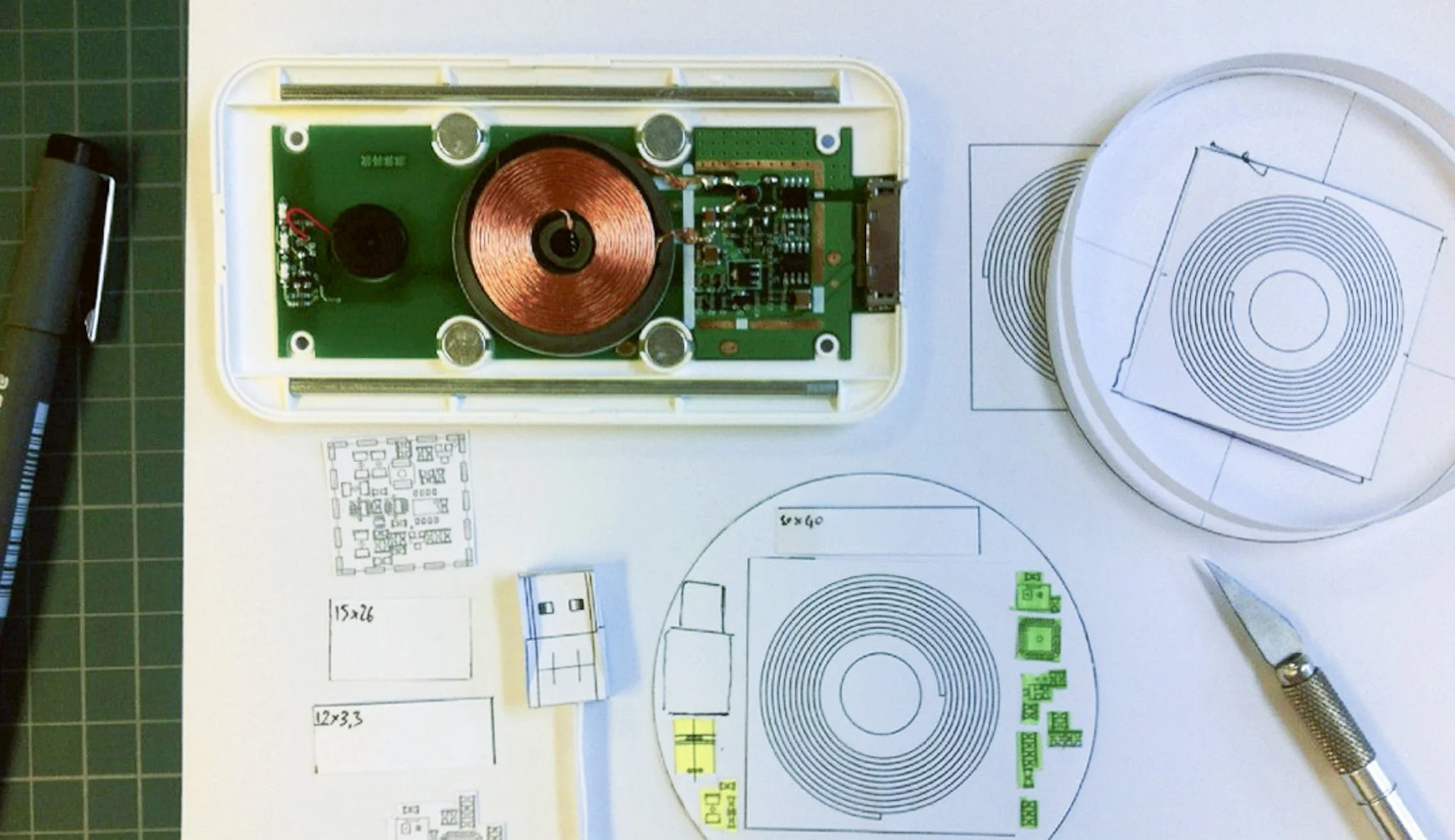
Product development is the complete process of turning an idea into a finished product that people can use or buy. This includes everything from brainstorming and design to concept to prototype development, testing, and manufacturing or launching.
Simple Definition:
Product development is the step-by-step journey of creating a product from idea to market.
Why It’s Important in Business
Without a structured product development process, even the best ideas can fail. Businesses rely on it to:
Turn ideas into real solutions
Reduce costly mistakes
Meet customer needs effectively
Stay competitive in the market
Think of it this way: having a great idea is just the beginning; product development is what makes that idea work in the real world.
Real-World Example
Imagine you want to create a smart home device that controls lighting through your phone:
You start with the idea, design how it looks and works through industrial design and engineering, build a prototype, test it for bugs or issues, improve it based on feedback, and manufacture and launch it.
Without product development, that idea would never become a real, usable product.
Key Stages of Product Development
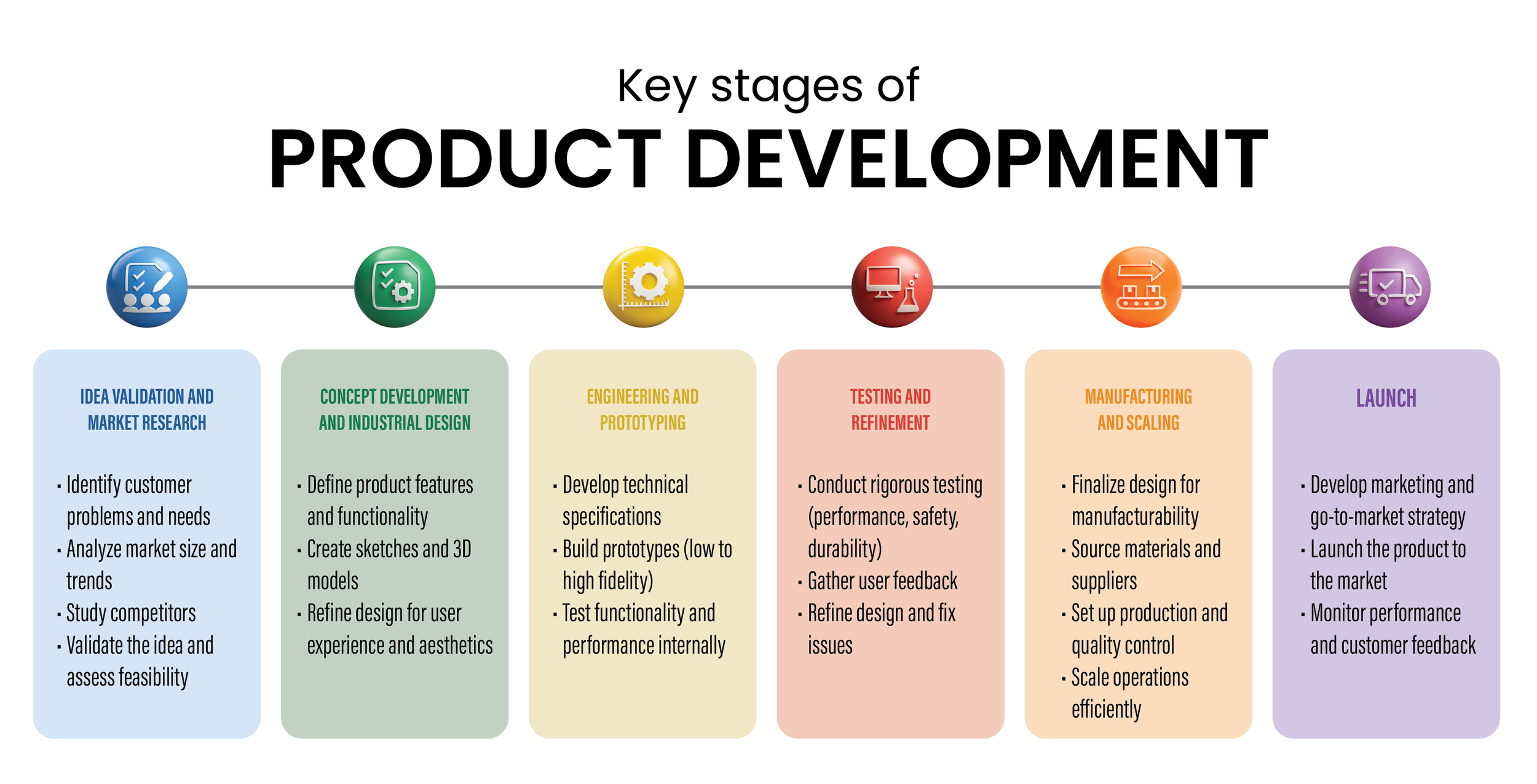
While every project is different, most follow a similar structure. Here’s a simple breakdown:
Idea Validation and Market Research: Define your product idea, identify the problem it solves, and validate demand by researching whether people actually want it and are willing to pay for it.
Concept Development and Industrial Design: This is where your product is designed—both how it looks (UI/UX or industrial design) and how it works (engineering).
Engineering and Prototyping: A working model of your product is created to test functionality.
Testing and Refinement: You refine the product by fixing issues and improving performance.
Manufacturing and Scaling: For hardware, this means production. For software, it means final development and deployment.
Launch: Your product is introduced to the market.
If you want a deeper breakdown of each stage, check out our full guide on the Key stages of product development.
Many beginners try to jump straight from idea to launch, but this often leads to failure.
A structured product development process helps you fix problems early and is much cheaper than fixing them after production.
For example, changing a design in the prototype stage is far cheaper than after manufacturing. Early production readiness and manufacturing planning prevent expensive post-production revisions."
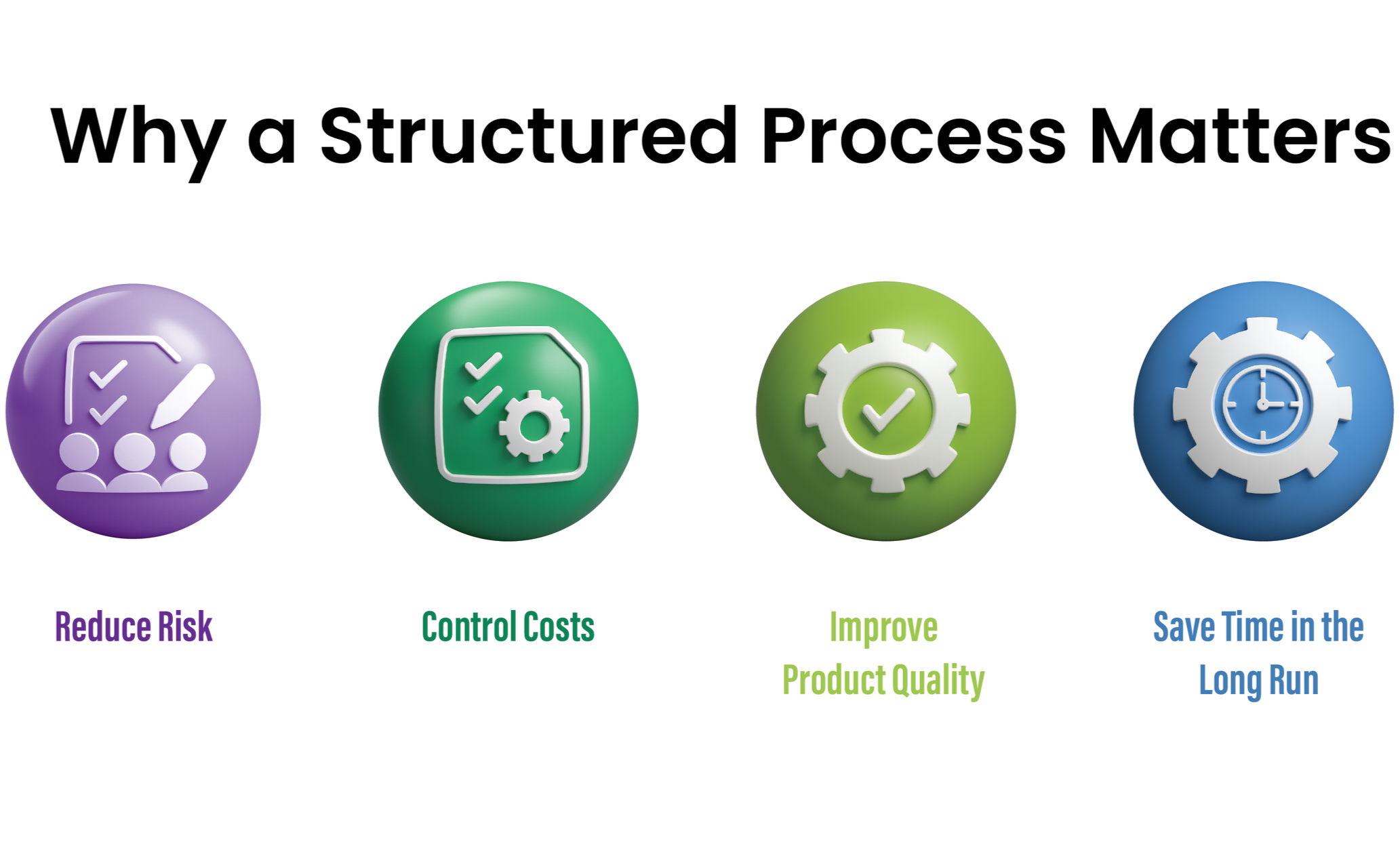
Reduce Risk: Skipping validation can lead to building something no one wants.
Example: Spending thousands on a product that has no demand.
Control Costs: Fixing problems early is much cheaper than fixing them after production.
Example: Changing a design in the prototype stage is far cheaper than after manufacturing.
Improve Product Quality: Testing and iteration ensure your product works well before launch.
Save Time in the Long Run: A clear process avoids confusion, delays, and costly rework.
This is why many startups and businesses work with our experienced team to ensure every stage is handled properly from the start.
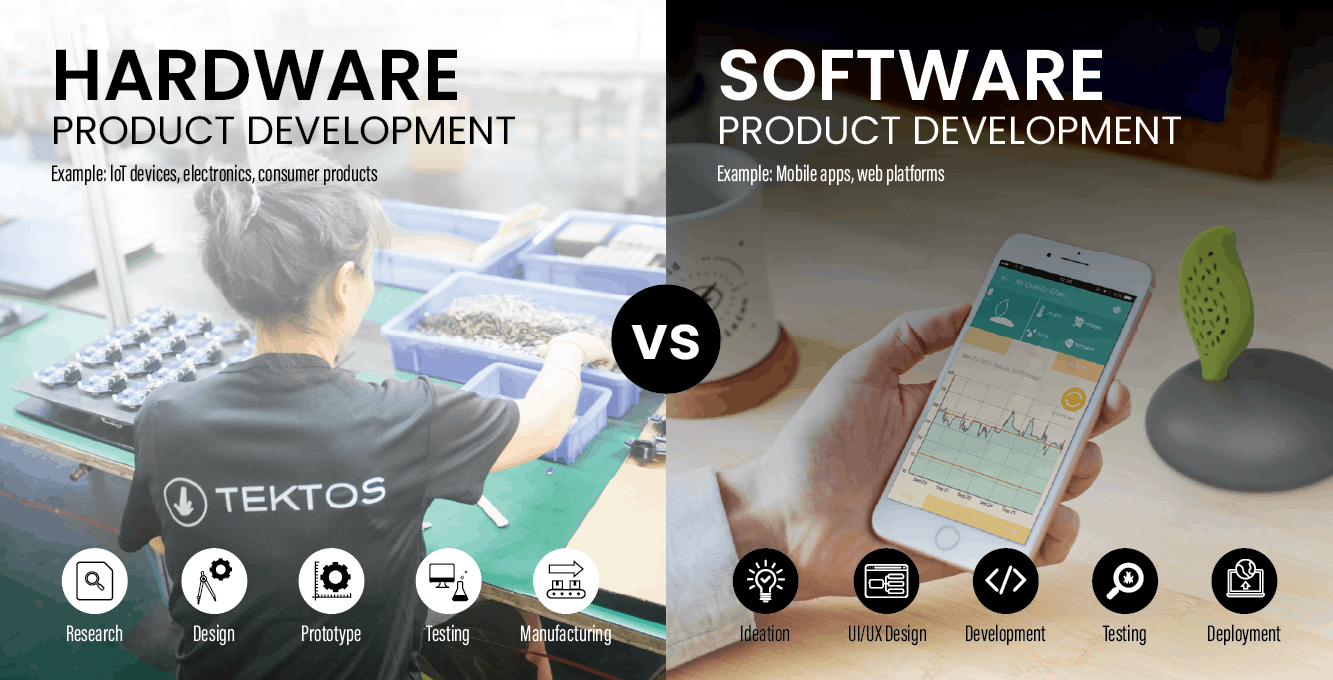
Not all products are created equal. The development process can vary significantly depending on whether you’re building hardware or software.
Hardware Product Development
Examples: IoT devices, electronics, consumer products
Requires physical materials and manufacturing
More expensive and time-consuming
Involves prototyping, testing, and production logistics
Harder to fix once manufactured
Software Product Development
Examples: Mobile apps, web platforms
Faster to develop and update
Lower initial cost
Easier to fix bugs after launch
No physical production required
Key Takeaway: Hardware is generally more complex and riskier, while software is more flexible. If you’re building a physical product, working with a full-service product development company can help you avoid costly mistakes and streamline development.
When Should You Start Product Development?
One of the biggest mistakes beginners make is starting too early—or too late.
Start Product Development When:
You clearly understand the problem you’re solving
You’ve validated your idea with real users
You have a basic plan or concept
You’re ready to invest time and budget
Don’t Start Yet If:
Your idea hasn’t been tested
You’re unsure who your target users are
You don’t know if people will pay for it
Pro Tip: Validate First
Before building anything, test your idea by:
Talking to potential users
Creating simple mockups
Running small surveys or landing pages
This saves you time, money, and effort.
If you’re unsure how to validate or move forward, partnering with trusted experts like Tektos Ecosystems can guide you from idea validation all the way to product launch.
FAQs
What is the first step in product development?
The first step is idea validation. Before designing or building anything, you need to confirm that your product solves a real problem and that people actually want it. This often involves market research, customer interviews, and simple testing methods like mockups or landing pages.
How long does product development take?
It depends on the complexity of the product:
Simple software: a few weeks to months
Complex apps: several months
Hardware products: several months to over a year
Factors like design complexity, testing, and manufacturing can all impact timelines. Working with an experienced product development company can significantly speed up the process.
Is product development expensive?
Costs vary widely depending on what you’re building:
Software projects can start relatively low
Hardware products often require a higher investment due to prototyping and manufacturing
However, a structured process helps reduce unnecessary costs. Investing in proper product development early—especially with a reliable partner like Tektos Ecosystems can save you from much bigger expenses later.
Final Thoughts
Product development is more than just building something, it’s about creating a solution that works, sells, and delivers value. By understanding the process and taking a structured approach, you greatly increase your chances of success.
If you’re a beginner or startup looking for expert guidance, Tektos Ecosystems offers end-to-end product development services, from idea validation to full-scale production.
Your idea deserves to become a real, successful product; the right process (and partner) makes all the difference.