
Top IoT Device Development Kits in 2026: How to Choose the Right One for Your Project
What Are IoT Development Kits and Why They Matter in 2026
IoT development kits are complete hardware platforms that provide everything you need to prototype, test, and develop connected devices. These kits typically include a microcontroller or processor, connectivity modules, sensors, and the necessary interfaces to build functional IoT applications. Understanding the complete IoT device development process helps you select the right development kit for your specific project requirements.
In 2026, the IoT landscape has matured significantly. With over 70,000 connected devices deployed through platforms like Tektos Ecosystems, the industry has moved beyond simple proof-of-concepts to production-grade solutions that demand reliability, security, and scalability. Whether you're a startup founder exploring your first connected product or an enterprise engineering team expanding your IoT portfolio, choosing the right development kit directly impacts your project's success, timeline, and total development costs.
The challenge isn't finding a development kit—it's selecting one that aligns with your technical requirements, budget constraints, and long-term product vision. This guide draws from real-world IoT product engineering and prototype development experience to help you make that decision confidently.
Key Factors to Consider When Choosing an IoT Development Kit
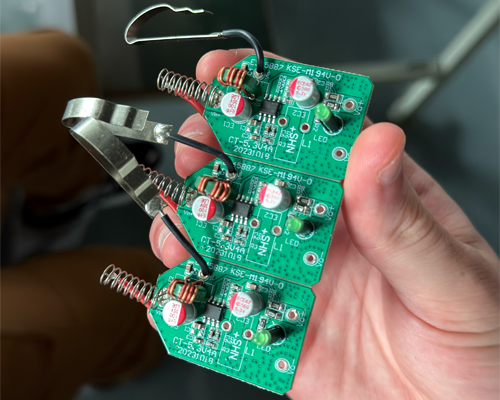
Before diving into specific products, understanding what matters for your project prevents costly mistakes during development.
Processor Performance and Architecture
It determines how much data processing happens on-device versus in the cloud. ARM Cortex-M series processors excel at low-power applications, while ARM Cortex-A processors and RISC-V architectures handle edge AI and complex computations. Your choice affects power consumption, processing capabilities, and overall system responsiveness.
Connectivity Options
Connectivity options have expanded dramatically. Wi-Fi 6E offers high-bandwidth, low-latency connections for data-intensive applications. Bluetooth 5.4 provides energy-efficient short-range communication ideal for wearables and smart home devices. For long-range, low-power applications like agricultural monitoring or industrial sensors, LoRaWAN and NB-IoT cellular connectivity prove invaluable. The right connectivity choice depends entirely on your deployment environment and data transmission requirements.
Power Consumption and Battery Life Requirements
It often become the deciding factor for battery-powered devices. Industrial IoT sensors deployed in remote locations need years of battery life, demanding ultra-low-power microcontrollers. Conversely, wall-powered smart home devices can prioritize performance over power efficiency.
Development Environment and Programming Language Support
It affects your team's productivity. Established ecosystems with Arduino IDE, PlatformIO, or vendor-specific IDEs accelerate development. Language support—whether C/C++, Python, or JavaScript—should match your team's expertise.
Cloud Platform Integration
It streamlines backend development. Development kits with native AWS IoT Core, Azure IoT Hub, or Google Cloud IoT integration reduce the complexity of secure device provisioning, data ingestion, and remote device management. At Tektos Ecosystems, we've found that seamless cloud integration cuts development timelines by 30-40% compared to building custom connectivity solutions.
Security Features and Encryption Standards
This cannot be an afterthoughts. Hardware-based secure elements, trusted execution environments, and cryptographic accelerators protect against emerging threats. Look for kits supporting TLS 1.3, secure boot, and hardware root of trust implementations.
Price Range and Total Cost of Ownership extends beyond the development kit itself. Factor in required sensors, enclosures, certification costs, and cloud service fees. A $30 development kit might require $200 in additional components, while a $150 kit could include everything needed for initial prototyping.
Community Support and Documentation Quality
It determines how quickly you overcome development obstacles. Active forums, comprehensive documentation, and abundant code examples accelerate troubleshooting and learning.
Best IoT Development Kits for Beginners in 2026
Starting with the right development kit builds confidence and accelerates learning.
Arduino Portenta C33
Arduino Portenta C33 represents an excellent entry point for teams new to IoT product development. Built around the Renesas RA6M5 microcontroller, it offers Wi-Fi and Bluetooth connectivity with Arduino's familiar development environment. The extensive Arduino ecosystem provides thousands of libraries and examples covering sensors, displays, and communication protocols. At approximately $60, it balances capability with accessibility.
Raspberry Pi 5
It has become the standard for prototyping complex IoT applications requiring Linux-based systems. With quad-core ARM Cortex-A76 processors and up to 8GB RAM, it handles edge computing, computer vision, and local AI inference. The vast Raspberry Pi community ensures solutions exist for virtually any technical challenge. While not the most power-efficient option, its $80-100 price point and versatility make it ideal for proof-of-concept development before transitioning to production hardware.
ESP32-S3
It dominates cost-sensitive IoT applications. This $10-15 development kit includes dual-core processors, Wi-Fi 6, Bluetooth 5, and multiple peripheral interfaces. Its low cost shouldn't suggest limited capability—the ESP32-S3 powers millions of production devices worldwide. The Espressif ecosystem includes robust documentation, making it suitable for beginners while remaining powerful enough for production deployment.
Top Professional-Grade IoT Development Kits for Commercial Projects
Commercial IoT product development demands development kits that transition smoothly from prototype to production.
NVIDIA Jetson Orin Nano
NVIDIA Jetson Orin Nano revolutionizes edge AI applications. With 40 TOPS of AI performance, it enables real-time computer vision, natural language processing, and complex sensor fusion at the edge. Industrial inspection systems, autonomous devices, and smart city applications leverage its capabilities. While the $499 price point positions it for serious product development, its production-ready form factor and industrial temperature range make it suitable for direct deployment in commercial products.
STM32 Wireless Connectivity Kits
These kits are from STMicroelectronics to provide industrial-grade reliability for commercial IoT deployments. These kits combine STM32 microcontrollers with various wireless modules, supporting sub-GHz, 2.4GHz, and cellular connectivity. Their extensive peripheral support, low power consumption, and proven reliability in harsh environments make them ideal for industrial IoT applications requiring certifications and long-term availability guarantees.
Nordic Semiconductor nRF9161 DK
Nordic Semiconductor nRF9161 DK excels in cellular IoT applications. This development kit supports LTE-M and NB-IoT connectivity with integrated GNSS, making it perfect for asset tracking, remote monitoring, and mobile IoT devices. Its ultra-low power consumption enables years of battery life even with cellular connectivity. At $150, it provides production-ready cellular capabilities without the complexity of integrating separate cellular modules.
Silicon Labs xG24 Dev Kit
This kit leads in Matter protocol support for smart homes and building automation. As Matter becomes the unified standard for smart home devices, this kit's native support eliminates integration headaches. Combined with excellent power efficiency and multi-protocol wireless support, it's positioned perfectly for consumer IoT products entering a crowded smart home market.
Best IoT Development Kits for Specific Use Cases
Different applications demand different technical approaches.
Smart Home and Home Automation Projects
Smart home and Home automation projects benefit from kits supporting Matter, Thread, and Zigbee protocols. The Silicon Labs xG24 and ESP32-based development kits with Matter support provide the interoperability consumers expect while maintaining the security and reliability smart home devices require.
Industrial IoT and Predictive Maintenance
These applications need rugged hardware capable of operating in harsh environments. STM32 development kits and industrial-grade variants of popular platforms offer extended temperature ranges, industrial communication protocols like Modbus and CAN bus, and the reliability required for 24/7 operation in factories and industrial facilities.
Agricultural IoT and Environmental Monitoring
Agricultural IoT and Environmental Monitoring requires long-range connectivity and exceptional battery life. LoRaWAN development kits and cellular IoT platforms enable sensor deployment across vast agricultural areas without infrastructure. Solar panel integration extends deployment duration indefinitely, making maintenance-free operation viable for years.
Healthcare and Wearable Device Development
Healthcare and Wearable Device Development demands miniaturization, biocompatible materials consideration, and strict regulatory compliance awareness from the start. Industrial design and hardware miniaturization expertise helps balance form factor constraints with functionality requirements. Low-power Bluetooth development kits with small form factors and extensive sensor integration options accelerate medical device development while considering the eventual regulatory pathway.
Edge AI and Computer Vision Applications
Edge AI and Computer Vision Applications leverage the processing power of NVIDIA Jetson platforms or specialized AI accelerators. These applications process video streams, sensor data, and complex algorithms locally, reducing latency and cloud costs while improving privacy and reliability.
Cloud Platform Compatibility: AWS, Azure, Google Cloud IoT Integration
Cloud integration transforms device data into actionable insights.
Development kits with native AWS IoT Core support simplify secure device authentication, fleet management, and data routing to AWS services. Pre-configured SDKs and examples eliminate weeks of integration work. Through our IoT cloud integration and backend development experience at Tektos, we've consistently found that pre-built cloud integrations reduce backend development effort by 40-50%.
Azure IoT Hub compatible boards provide similar advantages for Microsoft-centric organizations. Seamless integration with Azure Digital Twins, Azure Stream Analytics, and Power BI enables rapid dashboard creation and data analysis without custom backend development.
Google Cloud IoT platform integration options suit organizations already invested in Google Cloud services, though Google's pivot toward edge computing and AI services has shifted their IoT focus. Many modern development kits maintain compatibility through standard MQTT and HTTPS protocols, ensuring flexibility regardless of initial cloud platform choice.
Cost Comparison: Budget-Friendly vs. Enterprise IoT Development Kits
Understanding total costs prevents budget surprises.
Entry-level kits under $50
Entry level kits include ESP32 development boards, basic Arduino platforms, and simple sensor kits. These prove sufficient for learning, initial prototyping, and non-critical applications. However, they typically require additional components for complete prototypes and may lack production-ready features like secure elements or industrial temperature ratings.
Mid-range options ($50-$200)
Mid-range kits represent the sweet spot for serious product development. This range includes Arduino Portenta, Raspberry Pi platforms with accessories, and Nordic Semiconductor development kits. These provide production-relevant features while maintaining accessible pricing for startups and small development teams.
Professional kits ($200+)
Professional kits like NVIDIA Jetson platforms and comprehensive STM32 discovery kits include everything needed for advanced development. While the initial investment seems high, they often include debuggers, multiple connectivity options, and comprehensive sensor suites that would cost hundreds to source separately.
Hidden costs deserve attention. Quality sensors for environmental monitoring, air quality, or motion detection add $50-200 per prototype. Custom enclosures for field testing range from $100 for 3D printed versions to $500+ for machined prototypes. Certification testing—FCC, CE, and other regional requirements—costs $5,000-25,000 depending on product complexity and target markets. Cloud service fees for development and testing add $50-500 monthly during active development.
How to Get Started: Setting Up Your First IoT Development Kit
Beginning correctly accelerates progress and prevents frustration.
Unboxing should include verifying all included components against the kit documentation. Most modern development kits require minimal additional hardware—a USB cable and computer typically suffice for initial programming and testing. However, understanding power requirements prevents early failures. Some kits draw more power than USB ports provide during Wi-Fi transmission or processing spikes, requiring external power supplies.
Essential software includes the manufacturer's IDE or recommended development environment, appropriate device drivers, and initial example projects. Most manufacturers provide "getting started" guides that walk through LED blinking, sensor reading, and basic connectivity examples. Following these examples exactly before attempting modifications builds familiarity with the development workflow.
First project recommendations should match your ultimate product vision while remaining simple enough to complete quickly. If developing an environmental monitor, start with reading a single temperature sensor and displaying values. If building a smart lock, begin with controlling a servo motor through button presses. These foundational projects establish confidence before adding complexity like cloud connectivity, data processing, or multiple sensor integration.
Troubleshooting common issues becomes easier with methodical approaches. Connection problems usually stem from incorrect board selection in development software, wrong USB drivers, or insufficient power delivery. Communication failures often result from incorrect pin assignments or misconfigured protocols. Development kit forums and manufacturer support channels typically document solutions to common problems encountered by other developers.
Conclusion: Matching the Right IoT Development Kit to Your Project Requirements
Selecting an IoT development kit requires balancing immediate prototyping needs with long-term product vision. Beginners benefit from platforms with extensive documentation and community support like Arduino or Raspberry Pi. Commercial product development demands development kits offering clear production pathways, reliable long-term availability, and appropriate certifications.
Consider your connectivity requirements first—they often determine suitable platforms. Evaluate processing needs based on data volume, edge computing requirements, and power constraints. Factor in your team's existing expertise and learning capacity when choosing development environments. Most importantly, think beyond the prototype to production requirements including certifications, manufacturing scalability, and total cost at volume.
At Tektos Ecosystems, our 20+ years of product engineering experience has proven that the right development kit choice accelerates time-to-market by months. Whether you're developing your first IoT product or expanding an existing product line with connected capabilities, the development kit decision impacts every subsequent engineering choice. Choose wisely, prototype rapidly, and validate thoroughly before committing to production hardware designs.
FAQs About IoT Development Kits in 2026
What is the easiest IoT development kit for beginners?
The ESP32-S3 and Arduino Portenta C33 offer the best balance of capability, documentation, and community support for beginners. Both provide comprehensive examples and troubleshooting resources that accelerate learning.
Which IoT development kit has the best battery life?
Nordic Semiconductor's nRF9161 and STM32 ultra-low-power variants achieve years of battery life in optimized applications. Battery life depends heavily on duty cycle, connectivity usage, and sensor power consumption rather than processor choice alone.
Can I use multiple IoT development kits in one project?
Yes, heterogeneous systems combining different development kits often provide optimal solutions. A Raspberry Pi might handle edge computing while ESP32 modules manage distributed sensors, all communicating through MQTT or other standard protocols.
How long does it take to develop an IoT prototype?
Simple prototypes demonstrating basic connectivity and sensor reading require 2-4 weeks. Production-ready prototypes incorporating security, reliability testing, and industrial design typically require 3-6 months depending on complexity.
What programming languages are most common for IoT development?
C and C++ dominate embedded development for their efficiency and hardware access. Python has gained popularity for Raspberry Pi and edge computing applications. MicroPython and JavaScript serve specific platforms where rapid development outweighs performance concerns.